Yom haShoah is Israel’s Holocaust and heroism remembrance day, marked each year on the 27th day of Nisan, shortly after Passover, commemorating the Warsaw Ghetto Uprising. In Hebrew the day is called Yom HaZikaron laShoah ve-laG’vurah (יום הזיכרון לשואה ולגבורה( which means “Day of Remembrance for the Holocaust and heroism.”
While the world observes Holocaust Memorial Day in January, on the date that the Auschwitz death camp was liberated by the Allies, in Israel we commemorate the anniversary of the Warsaw Ghetto Uprising, when courageous Jewish people rose up to fight for their lives. The uprising was ultimately crushed by the Nazis, but Yom haShoah deliberately remembers not only the horrors but also the heroes of the Holocaust.
What was the Warsaw Ghetto?
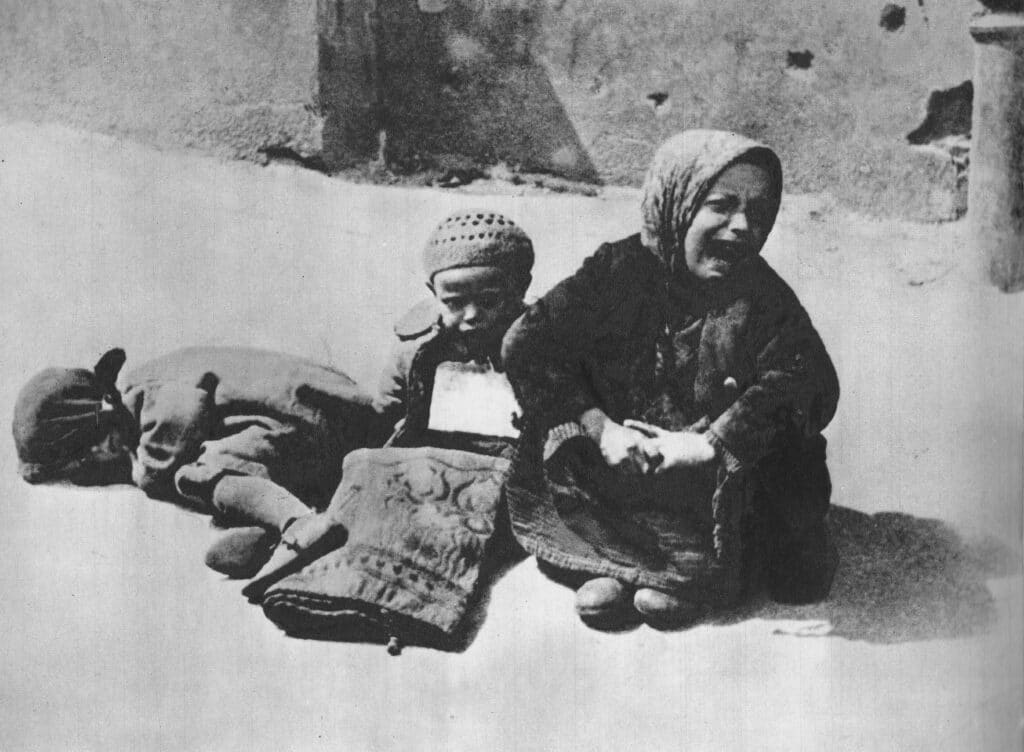
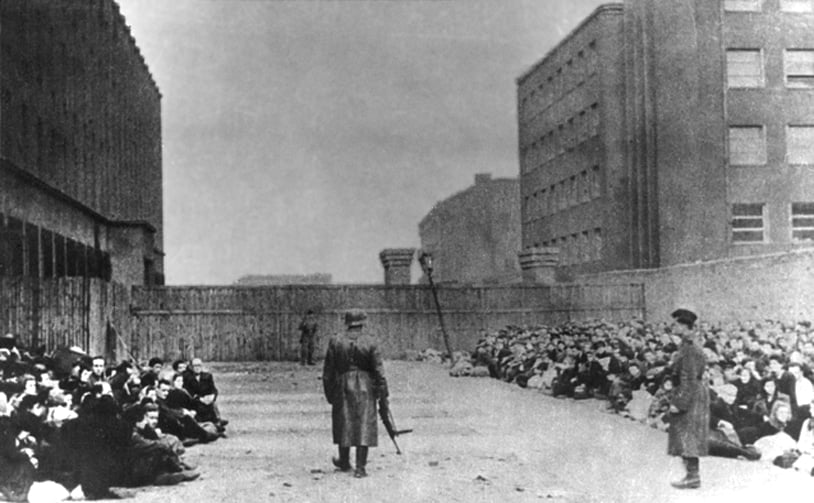
In 1939 almost half a million Jewish people in Poland were rounded up into an area of less than 3.5 square kilometers (1.5 miles) before being forced onto trains and sent to their deaths. The conditions in the ghetto were horrific, and squalor and starvation were rife. The overcrowding meant that on average there were nine people to a room, but many had no shelter at all and thousands died of disease or hunger each month.
When word got out that those leaving on trains were being slaughtered in the death camps, some bravely determined to rise up against their oppressors and fight for their lives. Over a quarter of a million had been sent to Treblinka concentration camp in the summer of 1942, so an organization called the ŻOB (Żydowska Organizacja Bojowa: Jewish Fighting Organization) was formed led by 23-year-old Mordecai Anielewicz. They issued a proclamation calling for the Jewish people to resist going to the railroad cars and by January began to actively fight the Nazis.
The heroes of the Warsaw Ghetto Uprising
According to the Holocaust Encyclopedia, Warsaw ghetto fighters fired upon German troops as they tried to round up another group for deportation in January 1943.
“Fighters used a small supply of weapons that had been smuggled into the ghetto. After a few days, the German troops retreated. This small victory inspired the ghetto fighters to prepare for future resistance.”
The uprising began in earnest on April 19, 1943, on the day before Passover. Nazi forces were coming to get the last of the ghetto’s inhabitants, but met around 700 young Jews who ware ready to fight for their lives. Astonishingly, they held out for almost a month against the heavily armed and well-trained Germans, but on May 16, 1943, the revolt was finally crushed, the Jewish survivors sent to the camps, and the ghetto was destroyed.
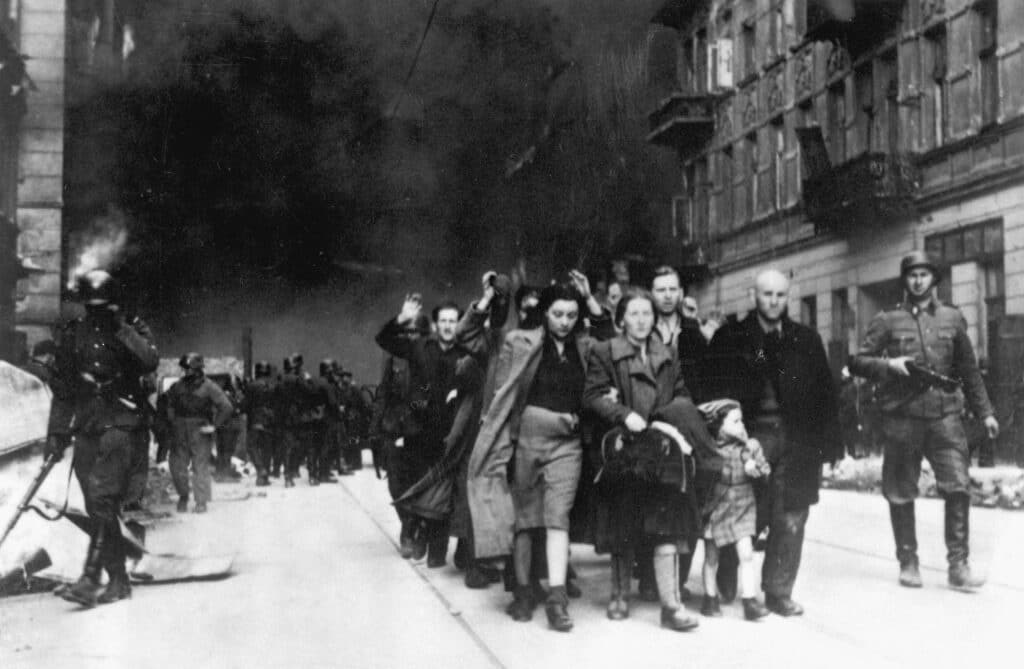
More than 7,000 Jews died while fighting or in hiding in the ghetto and only a very few escaped with their lives.1
Israel has chosen to mark the day of the uprising to focus on the courage and valor many Jewish people showed during the worst events in living memory. Like the rebels who resisted Rome at the Masada fortress, the Warsaw Ghetto fighters ultimately perished but they fought for their lives until their last breath. Though the uprising began on Nisan 14, the day is marked a little later in the month so as not to clash with Passover. Yom haShoah comes eight days before Israel’s Independence Day, linking the Holocaust with the rebirth of Israel.
The Messianic heroes of the Warsaw Ghetto
Dr Mitch Glaser, president of Chosen People Ministries, has written extensively about the Messianic Jewish believers who were trapped in the Warsaw Ghetto in his book, Heroes of the Holocaust: Poland, the Warsaw Ghetto and Yeshua. There were about a quarter of a million Jewish believers at the time of the Holocaust, and several thousand of them were trapped to starve and die in the Warsaw Ghetto.
“The achievements and witness of Jewish believers during the Holocaust and especially in the Warsaw Ghetto are essentially unknown to most present day Jewish believers. We stand on the shoulders of these heroes of the Holocaust—the Jewish believers of the Warsaw Ghetto—and their story, as much or as little as we know, must be told,” writes Dr. Glaser.
The historical book “Sefer Milhamot ha-Getaot” (Book of the Ghetto Wars) by Yitzhak Zuckerman and Mošē Basōq, confirms that there were indeed a great many Jews who believed in Jesus in the Warsaw Ghetto, and some testimonies characterized them very positively, at one point noting that, “Almost all of them were intellectuals”.
Dr. Hirszfeld, one of the Jewish believers trapped in the Ghetto, wrote in his book, The Story of a Life: “There were many people who were baptized in the Quarter—old and young, sometimes whole families.” He reflected,
“They were attracted to it by the appeal of a religion of love. They were attracted by the religion of the nation to which they felt they belonged. They were attracted to the religion to which there was no room, or least there should not be any room, for hate.”
Another Jewish believer who survived was Rachmiel Frydland. He wrote, “From my harrowing experience, I see that men who reject Messiah are capable of bringing hell on earth. But surely God has not abandoned mankind. He has a plan for every person who will trust Him. The Bible, which has guided and sustained me thus far, promises that peace and justice will fill the earth only when the Prince of Peace returns. He is the only hope of mankind, and I know that He will come, because He has proved His great love and His miraculous power to me.”
Gentile heroes of the Holocaust
Of course there was great heroism among Gentiles too, such as the Ten Boom family in the Netherlands and Deitrich Bonhoeffer, a German pastor, who courageously stood up for the Jewish people during the Holocaust at the expense of their own lives.
After being caught hiding Jews from the Nazis, Corrie Ten Boom was taken to Ravensbrück concentration camp along with her sister and elderly father. She was the only one who survived to tell the tale. Deitrich Bonhoeffer boldly spoke the truth and stood against the tide of hatred even in the German church. He was eventually executed for his courageous stand.
Others are less well known but are honored here in Israel’s Yad Vashem Holocaust Museum’s “Garden of the Righteous” where thousands of trees have been planted in memory of those who helped and stood up for the Jewish people, calling them “Righteous among the nations.” More trees are planted as more stories are discovered of Gentile heroism in the Holocaust.
As the hatred continues today against the people of Israel, will you be willing to stand up for them and with them?
Will you be counted as one of the righteous among the nations when Yeshua returns?
For I was hungry and you gave me food, I was thirsty and you gave me drink, I was a stranger and you welcomed me, I was naked and you clothed me, I was sick and you visited me, I was in prison and you came to me.’ Then the righteous will answer him, saying, ‘Lord, when did we see you hungry and feed you, or thirsty and give you drink? And when did we see you a stranger and welcome you, or naked and clothe you? And when did we see you sick or in prison and visit you?’ And the King will answer them, ‘Truly, I say to you, as you did it to one of the least of these my brothers, you did it to me.’ (Matthew 25:35-40)