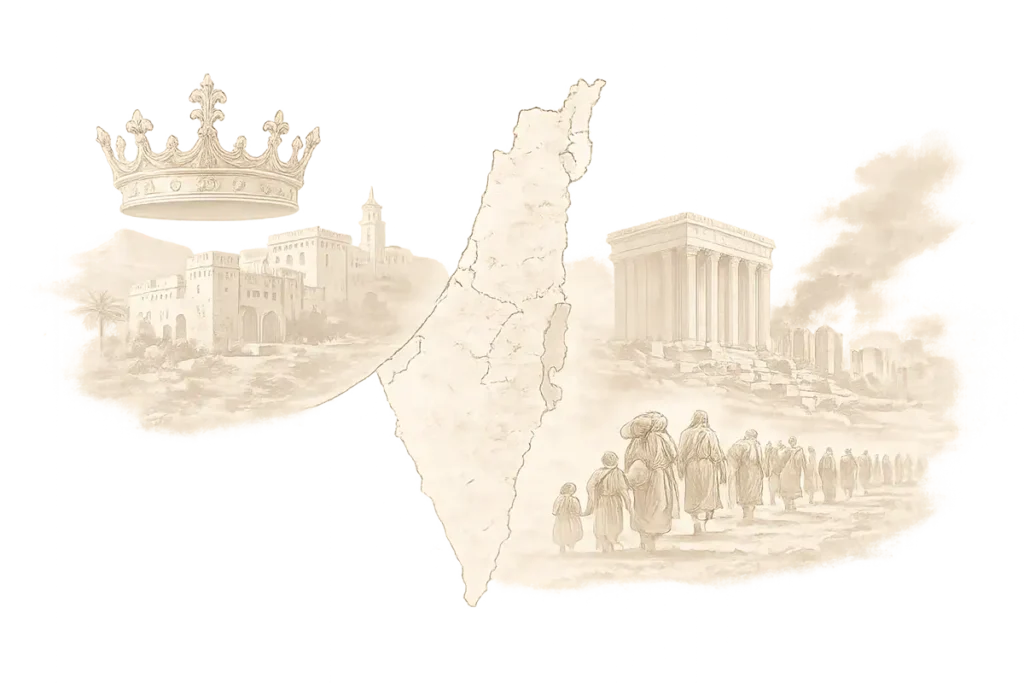
Division of the kingdom into Israel in the north and Judah in the south.
732–720 BCE
The Northern Kingdom is conquered by the Assyrian Empire, and much of the population is exiled.
701 BCE
Judah is attacked by the Assyrian king Sennacherib; Jerusalem is spared.
605 BCE
Judah is attacked by the Babylonian king Nebuchadnezzar; King Jehoiachin and the families of the elites in Judah, including the boy Daniel, are taken into exile.
597 BCE
During the second Babylonian siege of Jerusalem led by King Nebuchadnezzar, Ezekiel was taken into exile.
587–586 BCE
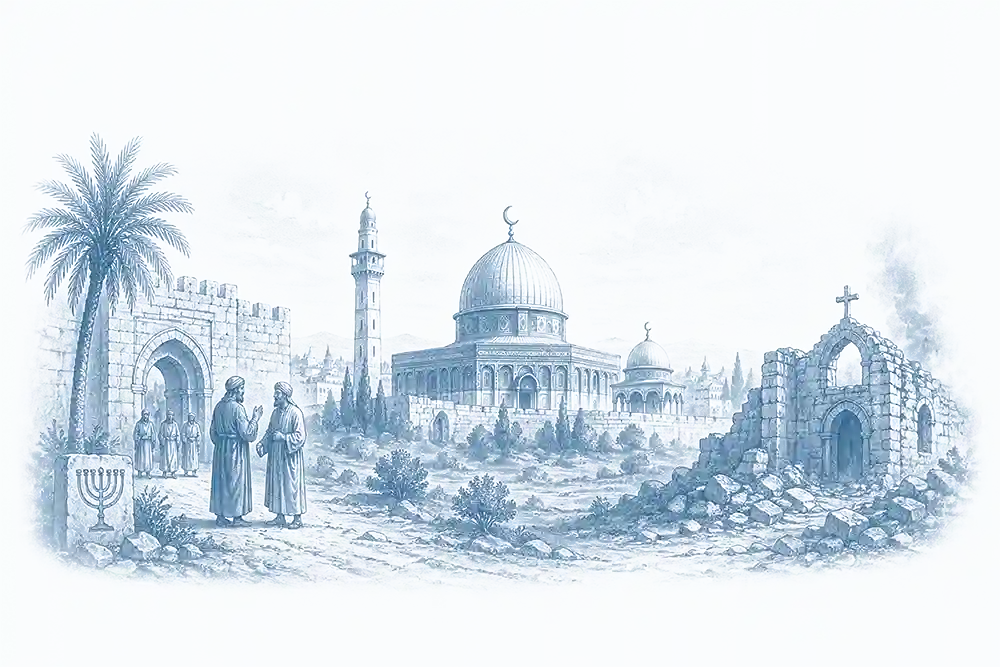
The Temple in Jerusalem is destroyed by the Babylonians, and more Judeans are exiled to Babylon.
RETURN & HELLENISTIC PERIOD
538 – 63 BCE
538–515 BCE
Return of many Jews from Babylonia; reconstruction of the Temple.
332 BCE
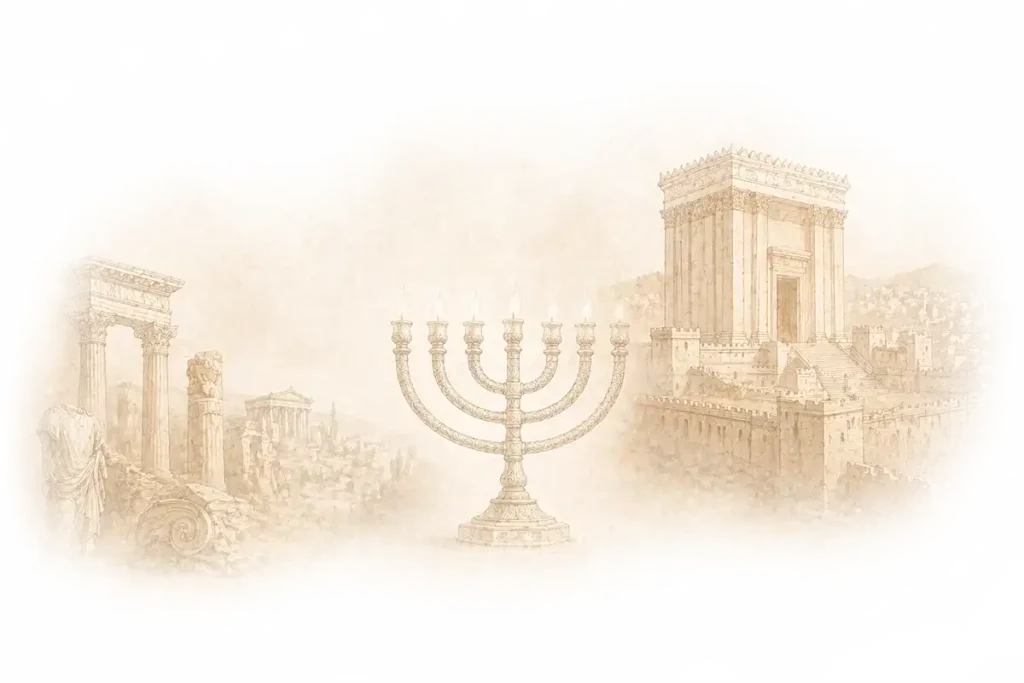
Conquest of the land by Alexander the Great; Hellenistic rule.
175 BCE
Antiochus IV, king of the Greek Seleucid Empire, intensifies attempts to eradicate Judaism.
168–165 BCE
Military campaign of Antiochus IV. Conquest of the city and desecration of the Temple.
166–160 BCE
Maccabean revolt (Hasmoneans) against the restriction of the practice of Judaism and the desecration of the Temple.
164 BCE
Judas Maccabeus captures Jerusalem; the Temple is restored and rededicated (story of Hanukkah).
Archelaus is deposed; Judea is governed directly by Rome.
26–36
Pontius Pilate serves as procurator of Judea.
~ 27–33
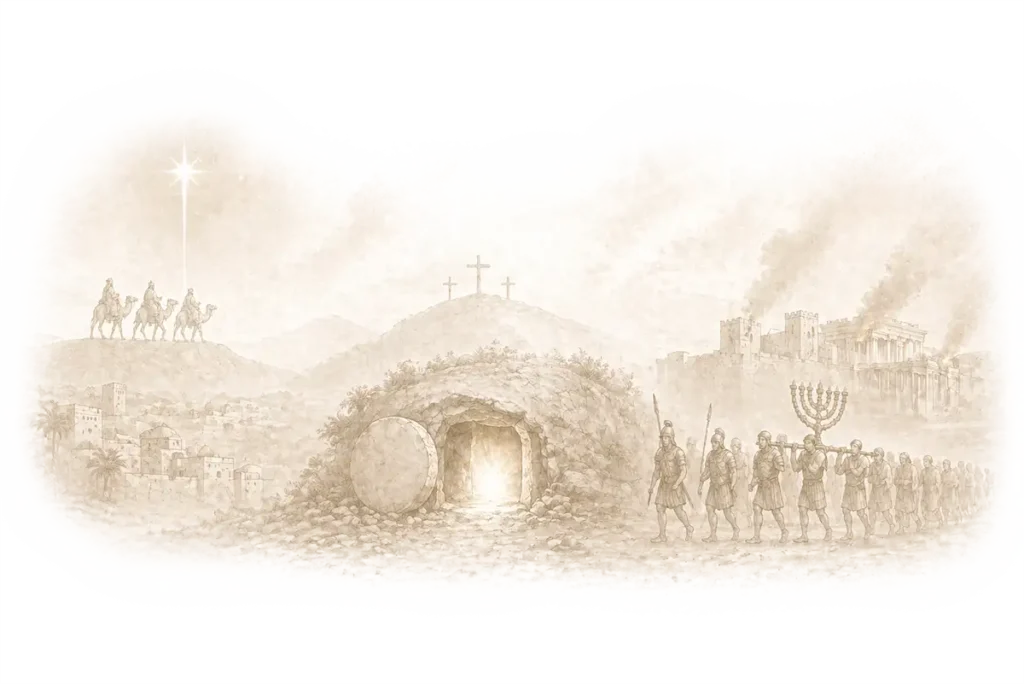
The ministry of Jesus.
~ 30–33
Jesus is crucified and resurrected.
66
Jewish revolt against the Romans. About 2.4 million Jews live in the land.
67–68
Jews believing in Jesus flee to Pella east of the Jordan.
70
Jerusalem is captured by the Romans; the Second Temple is destroyed. Many Jews are massacred, others flee or are taken into exile as slaves. In the revolt, a quarter of the Jewish population dies and a tenth is sold into slavery.
Rabbinic Judaism begins to reorganize around Yavneh in the coastal plain and later in Galilee.
73
The last resistance of the Jews in Masada is broken.
115–116
Diaspora revolt – a Jewish uprising in Cyrenaica, Egypt, Cyprus, Mesopotamia, during the reign of the Roman emperor Trajan.
130
Emperor Hadrian in Jerusalem; he decides on the construction of a Temple of Jupiter on the Temple Mount.
132–135
Bar Kokhba uprising against Rome. In the revolt, a third of the Jewish population of the land dies. The province of Judea is given the new name Syria-Palestina.
136
The Roman emperor Hadrian rebuilds Jerusalem as Aelia Capitolina and banishes the Jews from the city.
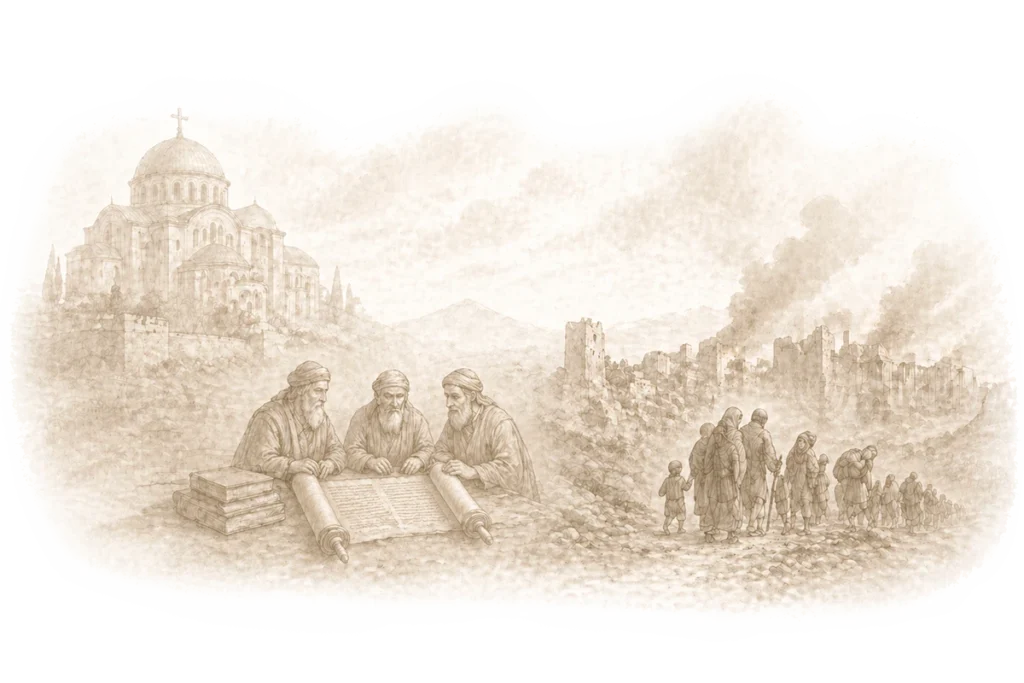
The Roman emperor Constantine renames the city of Aelia Capitolina back to Jerusalem and begins to make it a center of Christianity. The Jews still do not have free access to the city.
325–335
Church of the Holy Sepulchre in Jerusalem and Church of the Nativity in Bethlehem built.
351
Jewish uprising against Constantius Gallus. Chorazin, Beth-Shearim and Tiberias are severely damaged.
363
As part of his aversion to Christianity, Emperor Julian encourages the Jews to rebuild the Temple. His death after 2 years puts an end to this.
The Sanhedrin, the supreme rabbinical court based in Galilee, was ultimately dissolved following the restrictions imposed by the Byzantines.
610
The Jewish uprising against Byzantine rule begins.
614
The Sassanid Empire (Persia) conquers Israel and Jerusalem from the Byzantines and installs a Jewish leadership. Almost all churches and monasteries are destroyed. Massacres among the Christians with the help of the Jews.
629
The Byzantines reconquer the land, annihilate the Jewish population in Jerusalem and Galilee as an act of revenge and end the last major Jewish attempt to rule the land of Israel until modern times.
EARLY ISLAMIC PERIOD
638 – 1099
638
The Muslim caliph Umar conquers Jerusalem; Jews are allowed to live in Jerusalem again.
638/9
A temporary wooden structure is built on top of the ruins as a place marker for future Al-Aqsa Mosque.
691
The Dome of the Rock is built by the caliph Abd al-Malik on the site of the First and Second Temples in Jerusalem.
705–715
A new permanent mosque, Al-Aqsa Mosque, is built on the Temple Mount, along the southern city wall by the Umayyad caliphs Abd al-Malik and his successor al-Walid.
1009
Caliph El-Hakim has the Church of the Holy Sepulchre destroyed.
1042
The Byzantine emperor Constantine IX Monomachos promotes the reconstruction of the Church of the Holy Sepulchre in cooperation with the caliph.
CRUSADERS & MAMLUKS
1099 – 1517
1095
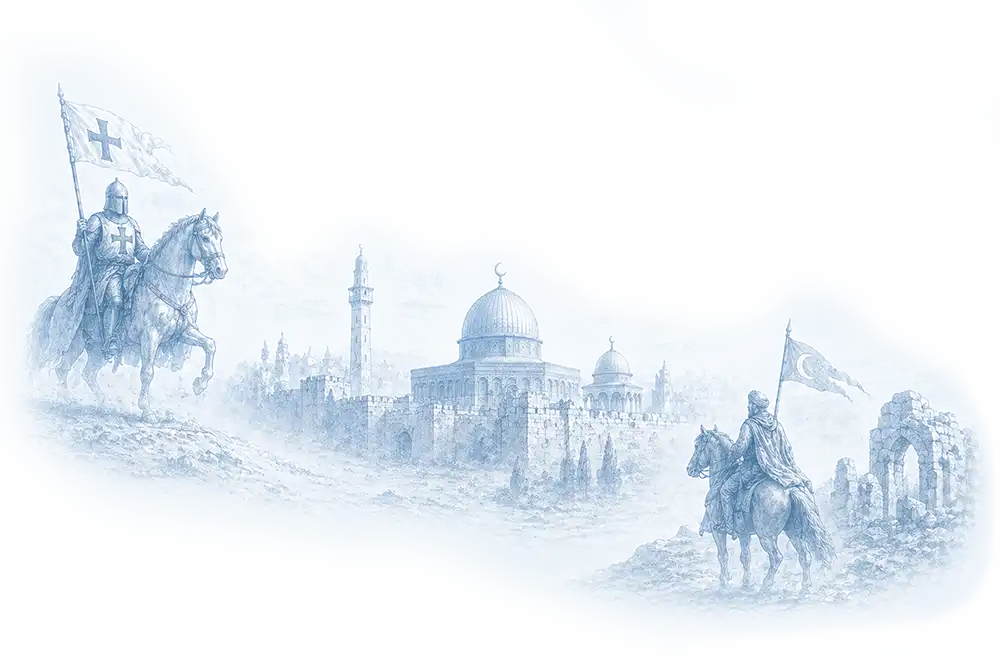
Under Pope Urban II, the Crusades begin to restore Christian rule over the Holy Land.
Saladin, a Kurdish Muslim, conquers Jerusalem from the Crusaders.
1211
A large group of Rabbinic Scholars from England and France emigrate to the land of Israel.
1244
Destruction of Jerusalem during internal Islamic conflicts.
1260
The Mongols invade the land of Israel and are defeated by the Mamluks at Ein Harod.
1264
Nachmanides, also known as Ramban, revives the Jewish presence in Jerusalem and encourages other Jews to return there.
1291
The Mamluks from Egypt and Syria conquer Acre and destroy the last capital of the Crusaders.
1333
The Franciscan Order establishes its seat in Jerusalem. Its monks take care of holy sites and pilgrims.
1348
The Black Plague strikes Jerusalem.
1492
The Jews are expelled from Spain. Many find refuge in the lands ruled by the Ottoman Muslims.
OTTOMAN PERIOD
1517 – 1917
1516
The Ottomans conquer Jerusalem, opening the way for large-scale Jewish settlement in the Land of Israel.
1535–1538
Suleiman the Magnificent rebuilds the city walls of Jerusalem.
1564
The code of Jewish law (Shulchan Aruch) is published, setting forth Jewish practice for daily life in simplified form
1663
Sabbatai Zevi, who claimed to be the Jewish messiah, visits the land of Israel. He is imprisoned by the Ottoman rulers and converts to Islam.
1700
Hundreds of Jews from Western Europe immigrate to Jerusalem under the leadership of Yehuda he-Hassid.
1799
Napoleon abandons the attempt to conquer Jerusalem after the defeat at Acre.
1800
About 300,000 inhabitants live in the land of Israel, about 7,000 of them Jews.
1860
The first residential neighborhood outside the walls of the Old City of Jerusalem is built.
1873
For the first time after 1,800 years, Jerusalem is a city with a Jewish majority. 21,000 inhabitants, 10,500 Jews, 5,000 Muslims and 5,500 Christians.
1881
Eliezer Ben-Yehuda moves to Jerusalem and begins the revival of Hebrew as a modern language.
1882–1903
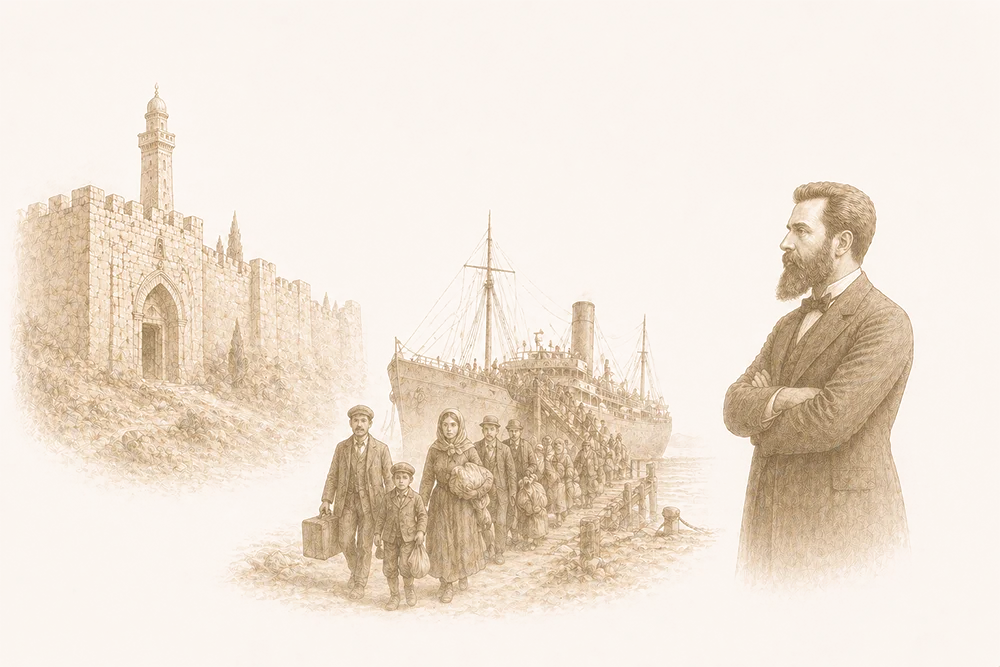
First larger immigration (Aliyah), mainly from Russia.
1897
The first Zionist Congress is convened by Theodor Herzl in Basel, Switzerland. Practical steps are set forth to help Jews immigrate to the Land of the Bible with the goal of establishing a state there.
1904–1914
Second Aliyah, mainly from Russia and Poland.
1909
The first kibbutz, Degania, and the first modern purely Jewish city, Tel Aviv, are founded.
1914
70,000 Jews live in the land.
1914–1917
During the First World War, Britain and France attack Ottoman-controlled territories in the Middle East. Many Jews, thought to be sympathetic to the British, are expelled from the land by the Ottoman authorities.
1917
400 years of Ottoman rule are ended by the British conquest. The British Foreign Secretary Balfour declares his support for the establishment of a “Jewish national home in Palestine”. Only about 30,000 Jews remain in the land.
ROAD TO STATEHOOD
1917 – 1948
1919–1923
Third Aliyah, mainly from Russia in the aftermath of the Bolshevik revolution there.
1919
The failed Faisal–Weizmann agreement, according to which a Jewish state was to be formed in accordance with the Balfour Declaration, led to part of the Arab revolt.
1920
The Histadrut (General Federation of Labor) and the Haganah (Jewish defense organization), and the Vaad Leumi (National Council) are founded by the Jewish community (Yishuv) to regulate its affairs.
1921
The first moshav (cooperative village), Nahalal, is founded.
1922
Great Britain receives from the League of Nations the mandate to govern Palestine (Land of Israel) until self-rule can be established there; Transjordan is established on three quarters of the territory, one quarter remains for the Jewish homeland. Founding of the Jewish Agency, which represents the Jewish community to the mandate authorities.
1924
The Technion, the first technical university, is founded in Haifa.
1924–1932
Fourth Aliyah, mainly from Poland.
1925
Opening of the Hebrew University of Jerusalem on Mount Scopus.
1929
Jews in Hebron are massacred by Arab terrorists.
1931
The Jewish underground organization Etzel is founded.
1933–1939
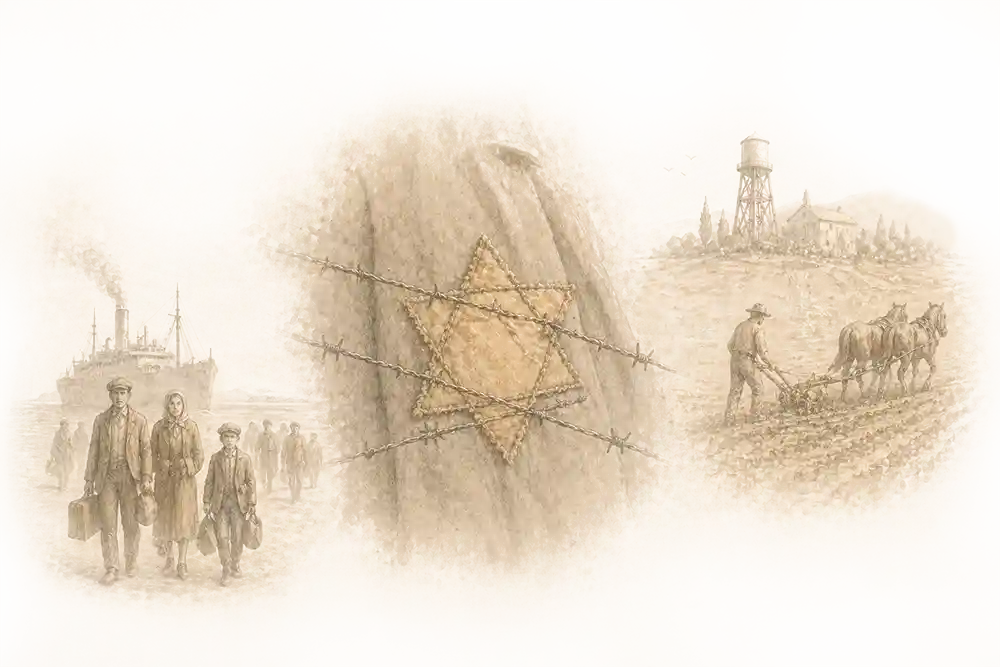
Fifth Aliyah, mainly from Germany in parallel with the rise of Naziism there.
1939
The “White Paper” of the British government provides for limiting Jewish immigration to Palestine to 10,000 per year, emergencies excepted.
1939–1945
Second World War; Holocaust in Europe, in which 6 million Jews were murdered.
1944
A Jewish brigade is formed as part of the British armed forces fighting against the Nazis in WW II.
1947
The UN proposes the creation of an Arab and a Jewish state. This Partition Plan is accepted by the Jewish leadership, and rejected by the Arab leadership. Jerusalem is to be an internationalized city.
INDEPENDENCE & EARLY STATEHOOD
1948 – 1973
1948
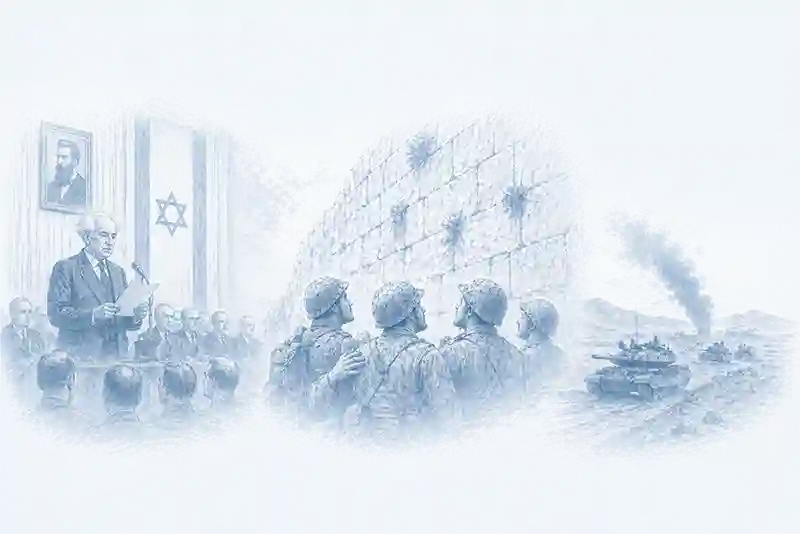
May 14: End of the British Mandate period. The State of Israel is proclaimed. May 15: Israel is invaded by five Arab states. Establishment of the Israel Defense Forces (IDF). War of Independence (May 1948 – July 1949). During the war, about 750,000 Palestinian Arabs flee from territories under Israeli control, out of a total population of about 1,200,000.
1948–1952
Mass Jewish immigration from Europe and from the Arab countries.
1949
Armistice agreements; Israel receives more territory than provided for in the Partition Plan, including West Jerusalem. Jordan annexes Judea and Samaria (which they call the “West Bank”) and East Jerusalem, and Egypt occupies the Gaza Strip.
The first Knesset (parliament) is elected. Israel is admitted to the United Nations as its 59th member.
1956 – 1957
Israel marches into Egypt during the Suez Crisis together with Great Britain and France in order to reopen the canal for Israeli shipping and to put an end to armed attacks by Palestinians in the Sinai. UN buffer forces are deployed in the Sinai and in the Gaza Strip, Israeli ships are allowed to pass through the Suez Canal.
1964
Completion of the national water carrier, which brings water from the Sea of Galilee in the north to the coastal plain and the semi-arid south.
May 1964
The Palestine Liberation Organization (PLO) is founded based in Jordan.
1966
A MiG-21 fighter jet is brought to Israel in a covert operation named “Operation Yahalom”.
1967
June: After months of tensions, including border clashes, UN buffer forces are expelled from the Sinai by Egypt. The Straits of Tiran are closed to Israeli shipping, Israel launches a preemptive strike against Egypt, and Jordan and Syria join the war. The war lasts six days, as a result of which Israel gains control over East Jerusalem, the entire West Bank, Gaza, the Golan Heights and the Sinai. In all these territories, Jewish settlements are established in the following years with government approval.
1973
October: On Yom Kippur, Egypt and Syria launch a coordinated attack against the Israeli armed forces in Sinai and on the Golan Heights. Israel is victorious, but only after significant losses. Public sentiment turns against the ruling Labor Party.
REGIONAL WARS & DEVELOPMENT
1973 – 1990
1975
Israel becomes an associate member of the European Economic Community.
In the controversial UN Resolution 3379, Zionism is described as a form of racism and racial discrimination.
1976
Mass protests by Israeli Arabs against the government’s attempts to expropriate land in the Galilee region in northern Israel. Six Arab citizens are killed in clashes with security forces. The memory of these events has since been commemorated annually as Land Day.
Israeli commando forces storm Entebbe Airport in Uganda and free more than 100 predominantly Israeli and Jewish hostages who are held captive by German and Palestinian terrorists.
1977
May: After the Knesset elections, Likud forms the government and ends the 30-year rule of the Labor Party.
November: Egyptian President Anwar Sadat visits Jerusalem and initiates the process that leads to Israel’s withdrawal from the Sinai and to Egypt’s recognition of Israel in the Camp David Accords of 1978. In the agreements, Israel also commits to expanding Palestinian self-government in the West Bank and the Gaza Strip.
1980
After an inflation rate of 130%, the Israeli lira is replaced by the Israeli shekel.
1981
June: In an attack by the Israeli Air Force, the nuclear reactor in Osirak in Iraq is destroyed.
1982
The three-stage withdrawal of Israel from the Sinai Peninsula is completed.
June: Israel marches into Lebanon to drive out the leadership of the Palestine Liberation Organization (PLO) after a small militant Palestinian group carried out an assassination attempt on the Israeli ambassador in London.
1984
July: After the elections, a national unity government (Likud and Labor) is formed.
November: Operation Moses, a covert airlift for Ethiopian Jews begins. The operation is repeated in 1991 under the name Operation Solomon.
1985
June: Israel withdraws from most of Lebanon, but continues to occupy a narrow security zone along the border.
Jibril deal: Release of 1,150 prisoners in exchange for three Israeli soldiers.
After an inflation rate of over 400% per year, the shekel is replaced by the new shekel, together with reforms that lead the Israeli economy into the modern era.
1987
The First Intifada begins (Palestinian uprising). The Muslim Brotherhood in Gaza founds the Hamas movement, which quickly turns to violence against Israel.
1988
September: With the reconnaissance satellite Ofek, Israel becomes one of only eight countries at that time capable of independently launching satellites.
1990
The Soviet Union allows Jews to emigrate, which leads to about one million former Soviet citizens moving to Israel.
TRANSITION & AGREEMENTS
1990 – 2005
1991
Israel is attacked by Iraqi Scud missiles during the Gulf War.
Resolution 4686 of the United Nations General Assembly revokes Resolution 3379, equating Zionism with Racism.
At a conference in Madrid organized by the United States and the Soviet Union, representatives of Israel, Lebanon, Syria, Jordan and the Palestinians meet for the first time since 1949. This sets in motion talks to normalize relations.
1992
Establishment of diplomatic relations with China and India.
The Labor Party returns to power under Yitzhak Rabin. Rabin promises to halt Jewish settlement construction and opens secret talks with the PLO, leading to theOslo Accords.
1993
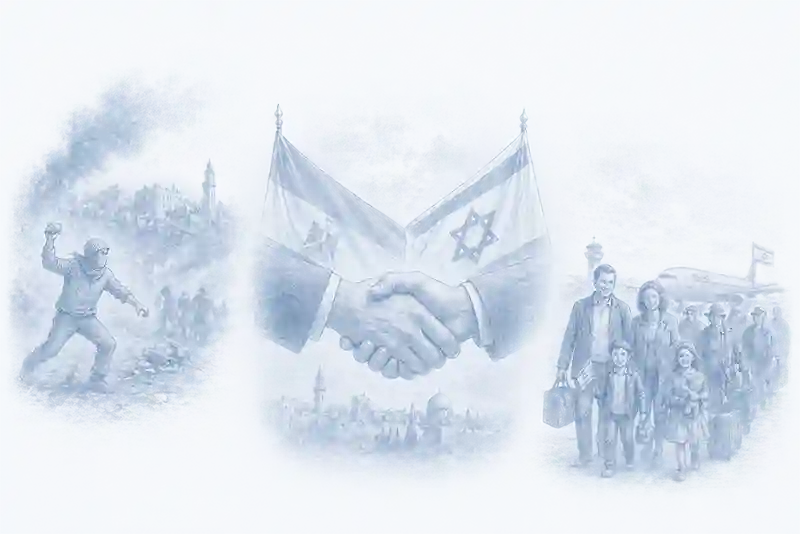
Oslo Accords: Declaration of Principles on interim self-government arrangements for the Palestinians, signed by Israel and the PLO as the representative of the Palestinian people.
1994
Implementation of Palestinian self-rule in the Gaza Strip and in the Jericho area. Rabin, Peres and Arafat receive the Nobel Peace Prize. Morocco and Tunisia establish representative offices. Signing of the Israeli-Jordanian peace treaty. Israel and the Vatican establish full diplomatic relations.
A Jewish extremist massacres Muslims in the Machpelah mosque in Hebron.
1995
Expansion of Palestinian self-rule in the West Bank and the Gaza Strip; election of the Palestinian Council.
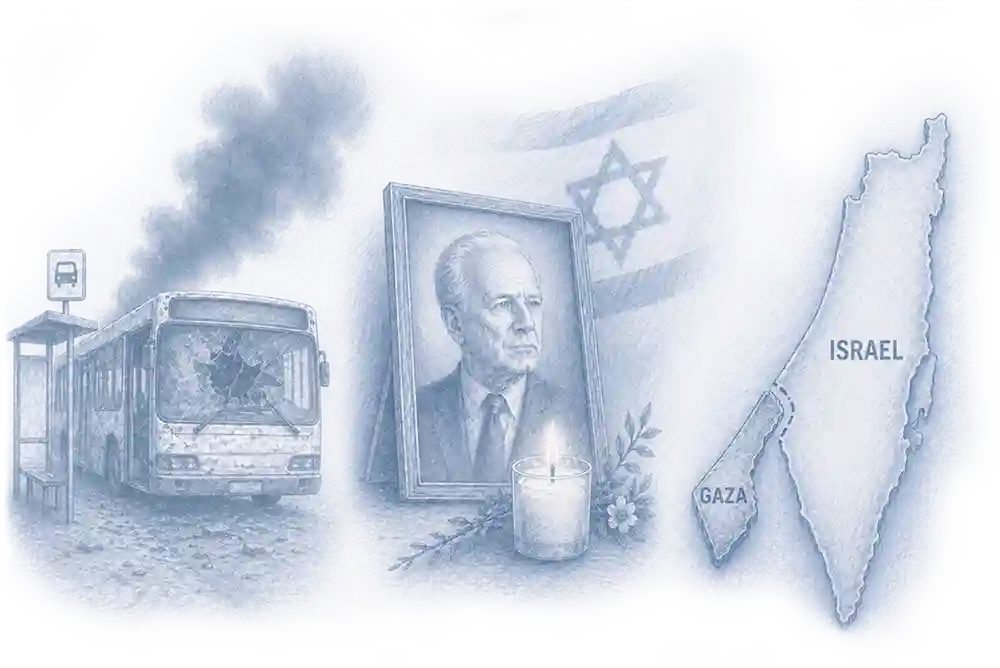
November: A Jewish extremist shoots Yitzhak Rabin in Tel Aviv. Shimon Peres assumes the office of Prime Minister.
1996
May: Likud returns to power under Benjamin Netanyahu and signs the Hebron Protocol and the Wye River Memorandum, giving control of additional territory to the Palestinian Authority. Muslim fundamentalist terrorism against Israel escalates.
Operation “Grapes of Wrath”: retaliation for attacks on northern Israel by Hezbollah terrorists from Lebanon.
2000
Israel withdraws from the security zone in southern Lebanon.
The Second Intifada, a new wave of Palestinian violence, featuring suicide bombers, breaks out.
2001
Minister of Tourism Rehavam Ze’evi is murdered by terrorists.
2002
Israel launches Operation Defensive Shield in response to massive Palestinian terrorist attacks. Israel also begins the construction of the anti-terror barrier to prevent terrorists from the West Bank from killing Israeli citizens.
2003
The Quartet of the United States, the European Union, Russia and the United Nations proposes a roadmap for resolving the Israeli-Palestinian conflict, which would lead to an independent Palestinian state. Both Israel and the Palestinian Authority accept the plan, which calls for a freeze on Jewish settlements in the West Bank and an end to attacks on Israelis.
2005
Israel implements the disengagement plan and withdraws all Jewish settlers and military forces from the Gaza Strip.
REGIONAL & SECURITY DEVELOPMENTS
2005 – 2014
2006
Israel carries out military operations against Palestinian terrorists in the Gaza Strip following the abduction of an Israeli soldier.
The Second Lebanon War breaks out, in which Israel conducts military operations against Hezbollah terrorism in southern Lebanon, following rocket attacks by Hezbollah and the abduction of two Israeli soldiers.
2007
After the violent takeover of the Gaza Strip by Hamas, Israel declares the Gaza Strip a “hostile territory”.
Attack on the Syrian nuclear reactor built by North Korea.
2008
Israel celebrates its 60th anniversary and begins its Gaza operation in response to the firing of more than 10,000 rockets and mortars from the Gaza Strip.
2010
Israel joins the Organisation for Economic Co-operation and Development (OECD).
May: Nine Turkish pro-Palestinian activists attempting to break the blockade of the Gaza Strip are killed in clashes with Israeli soldiers. Relations with Turkey are on the brink. Israel apologizes for the deaths in 2013.
2011
Prime Minister Benjamin Netanyahu appears before both houses of the US Congress and declares that “Israel will not return to the indefensible lines of 1967.”
Hamas releases the Israeli soldier Gilad Shalit in exchange for 1,027 prisoners, after Germany and Egypt mediate the deal.
First interception of a rocket by the Israeli Iron Dome anti-missile defense system.
2012
November: Israel launches a week-long military operation against armed groups in the Gaza Strip, as rocket attacks on Israeli cities have been increasing for months.
The UN upgrades Palestine from an “observer” to a “non-member observer state.”
2013
August: Israeli-Palestinian peace talks resume.
2014
July–August: Israel responds to attacks by armed groups in the Gaza Strip with a military operation by air and on the ground in order to destroy rocket launchers and Hamas attack tunnels. The clashes end in August with a ceasefire mediated by Egypt.
CONTEMPORARY ISRAEL
2015 – 2023
2015
May: Prime Minister Netanyahu forms a new coalition government.
October: A wave of shootings, stabbings, and vehicular attacks carried out by Palestinians or Israeli Arabs.
November: The EU decides that goods from Jewish settlements in the West Bank should be labeled as originating from settlements rather than from Israel.
2017
February: The parliament passes a law that retroactively legalizes dozens of Jewish settlements in Judea and Samaria. In June, construction begins on the first new Jewish settlement in the West Bank in 25 years.
December: US President Donald Trump recognizes Jerusalem as the capital of Israel. The following March, he recognizes Israeli sovereignty over the Golan Heights, which Israel captured from Syria in the 1967 war and later annexed. The international community does not recognize Israeli sovereignty.
2018
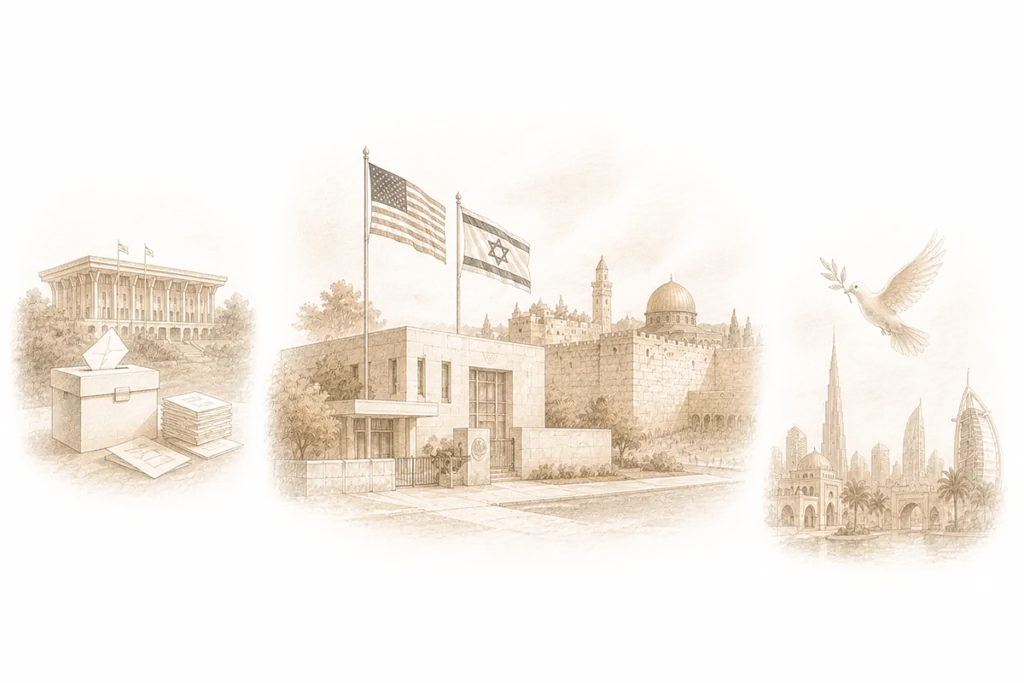
The US embassy is symbolically opened on May 14, the 70th anniversary of Israel’s declaration of independence, replacing the embassy in Tel Aviv.
2019–2020
In three parliamentary elections, Netanyahu runs against a centrist alliance led by former Chief of Staff Benny Gantz, but no clear majority emerges.
2019
November: The United States declares that it no longer considers Israeli settlements in the West Bank to be illegal.
2020
August: The United Arab Emirates becomes the first Gulf state to establish diplomatic relations with Israel.
September: Peace agreement between Israel and Bahrain.
2021
May: Unrest over the forced evictions of long-term Arab squatters in East Jerusalem leads to conflict between Israel and Hamas and communal violence in Israeli cities.
March 23: Fourth election. After weeks of negotiations and an eleven-day war between Israel and Palestinian terrorist groups in the Gaza Strip.
June: Yair Lapid and Naftali Bennett form a government coalition of right-wing, liberal and Arab parties, ending twelve consecutive years of Netanyahu’s rule.
2022
December 29: After less than a year in power, Lapid’s coalition loses its narrow majority due to defections. Instead of waiting for the opposition to vote it out, the government dissolves parliament, triggering Israel’s fifth election since 2019.
SWORDS OF IRON WAR
2023 – PRESENT
2023
October 7, 2023: Hamas massacre: nearly 1,200 Israelis killed, over 250 hostages taken. Oct.–Dec. 2023: Israeli counter-offensive in Gaza to destroy Hamas infrastructure.
2024-2025
Multi-front war: attacks from Gaza, Lebanon, Syria, Iraq, Yemen, and direct Iranian attacks.
2025
June 13–24: The Twelve-Day War between Israel and Iran. Israel gains air superiority and destroys strategic targets in Iran. Iran fires about 500 ballistic missiles and 1000 explosive drones at Israeli population centers.
October 9: Ceasefire deal between Israel and Hamas: prisoner exchange and release of all living hostages. On October 7 Israeli losses stood at 1,163, 766 civilians and 397 IDF Soldiers and Security Forces. In total, the war took the lives of 966 IDF soldiers. One of the highest military losses in decades.
2026
At the beginning of 2026, the population of the State of Israel was 10.25 million. By comparison, at the time of the founding of the state there were about 806,000 inhabitants in Israel. About 76% are recognized as Jewish, 21% are Arab Muslims, Arab Christians or Druze, and a further 3% are non-Arab Christians, members of other religions or had no religious classification in the Interior Ministry. The average life expectancy in Israel in 2025 was almost 84 years, ranking seventh worldwide. Israel has the highest birth rate among developed countries at 2.8 children per woman.
January: The last dead hostage, Ran Gvili, was identified and returned to Israel. There are no longer any hostages in the Gaza Strip. Gvili was killed on October 7, 2023, defending Kibbutz Alumim. His body was subsequently taken to Gaza.
February 28 – April 9: Operation Roaring Lion (in Israel) and “Epic Fury” (in the US): Joint Israel / US strikes on Iran. Iran fires about 650 missiles, as well as explosive drones at Israeli population centers. Hezbollah terrorists based in Lebanon fire more than 1200 missiles at Israeli population centers.
We use cookies to improve your experience on our site. By using our site, you consent to cookies.
Cookie Preferences
Manage your cookie preferences below:
Essential cookies enable basic functions and are necessary for the proper function of the website.
Name
Description
Duration
ofi_country
-
fundraiseup_stat
-
fundraiseup_func
Session
fundraiseup_cid
1 year
Cookie Preferences
This cookie is used to store the user's cookie consent preferences.
30 days
WooCommerce is a customizable eCommerce platform for building online stores using WordPress.
Name
Description
Duration
woocommerce_recently_viewed
Powers the Recent Viewed Products widget
session
store_notice
Allows customers to dismiss the Store Notice.
session
woocommerce_snooze_suggestions__
Allows dashboard users to dismiss Marketplace suggestions, if enabled.
2 days
woocommerce_dismissed_suggestions__
Count of suggestion dismissals, if enabled.
1 month
woocommerce_cart_hash
Helps WooCommerce determine when cart contents/data changes.
session
woocommerce_items_in_cart
Helps WooCommerce determine when cart contents/data changes.
session
wp_woocommerce_session_
Contains a unique code for each customer so that it knows where to find the cart data in the database for each customer.
2 days
WPForms is a user-friendly WordPress plugin for creating custom forms with drag-and-drop functionality.
Name
Description
Duration
_wpfuuid
Used to track user interactions with forms.
11 years
Statistics cookies collect information anonymously. This information helps us understand how visitors use our website.
Name
Description
Duration
_ga_FFWKYR1PDX
-
_ga_63HYLV34E1
2 years
_ga
2 years
_clsk
1 day
_clck
-
SourceBuster is used by WooCommerce for order attribution based on user source.
Name
Description
Duration
sbjs_udata
Information about the visitor’s user agent, such as IP, the browser, and the device type
session
sbjs_first
Traffic origin information for the visitor’s first visit to your store (only applicable if the visitor returns before the session expires)
session
sbjs_current
Traffic origin information for the visitor’s current visit to your store
session
sbjs_first_add
Timestamp, referring URL, and entry page for your visitor’s first visit to your store (only applicable if the visitor returns before the session expires)
session
sbjs_current_add
Timestamp, referring URL, and entry page for your visitor’s current visit to your store
session
sbjs_migrations
Technical data to help with migrations between different versions of the tracking feature
session
sbjs_session
The number of page views in this session and the current page path
30 minutes
Marketing cookies are used to follow visitors to websites. The intention is to show ads that are relevant and engaging to the individual user.