There are some wild ideas of what life looks like for Israeli Jewish and Arab believers in Jesus, but what’s the reality? It’s not easy that’s for sure, but some viral videos give a completely misleading idea of what happens to the believers here in Israel… And there are some secrets bubbling under the surface that may come as a surprise.
Freedom of Religion
The state of Israel has freedom of religion enshrined in law, and everyone is legally free to worship as they please. Although clips of Orthodox Jewish people spitting on Christians gained huge traction on social media, the truth is this sort of thing is extremely rare. Israel is a multicultural society with a mixture of people groups and faiths, and manages to stay tolerant, allowing citizens to follow their religions in safety and freedom.

There are around 400 mosques in Israel, more than 220 Christian churches (including Catholic Churches, Eastern Orthodox, Maronite, Armenian, and many others) and then there are also well over 250 Messianic Jewish congregations, probably nearer 300.
Most of Israel’s two million Arabic speakers are either Muslim or Christian, with some following the Druze religion. There are also a few Israelis following other religious minorities such as Bahais, Mormons, Samaritans and others, but the vast majority of Israelis (over 70%) are Jewish. We don’t know exactly how many Jewish Israelis believe in Yeshua but according to our survey in 2017 there were some 30,000. We believe there are many more today — possibly even double that number.
Is there persecution of believers?
It’s perfectly legal for Israelis to talk about their faith, although not with children. In the Middle East in general it is not considered “kosher” to try to persuade anyone to change their religion from one thing to another. There is the death penalty in many countries for who Muslims to leave their religion, and although the situation is very different in Israel, many Jewish people consider conversion to be like death — as if the person has been lost or taken from the house of Israel. It is seen as a betrayal to believe in Yeshua, and as if the Jewish person has stopped being Jewish (even though they haven’t) and so even though evangelism may be legal, it is very much frowned upon.
If Jewish people choose to follow Yeshua they do so knowing they will face hard implications, often rejection from family, friends, and wider society but there is no violence or danger to speak of. A believer might be ostracized from their family, or even considered dead in some communities, but they will not be physically harmed.
Of course, the situation is more serious for Muslim background believers in the Palestinian Territories and those living in other countries under Sharia law, but even in Israel life for both Jewish and Arab believers often becomes much more challenging for those who make the brave decision to follow Jesus.
Somewhat surprisingly, life can also be hard for Arabs from a traditional Christian background who choose to follow Jesus in earnest.
Those who become born again evangelicals can also experience rejection from friends and family, much like their Jewish brothers and sisters.
Different cultures, but the same family
Jews and Arabs who follow Jesus in Israel may share a common experience of rejection from their communities, but they worship in very different ways.
Messianic Jews usually meet on Shabbat and worship the Messiah in the Hebrew language. It’s very rare to see a cross or any statues anywhere, but Yeshua is often represented in other ways, such as with a menorah since He is the Light of the World. They follow the Jewish calendar and celebrate Yeshua’s coming, death, and resurrection in the biblical feasts of the Lord, rather than at Christmas and Easter.
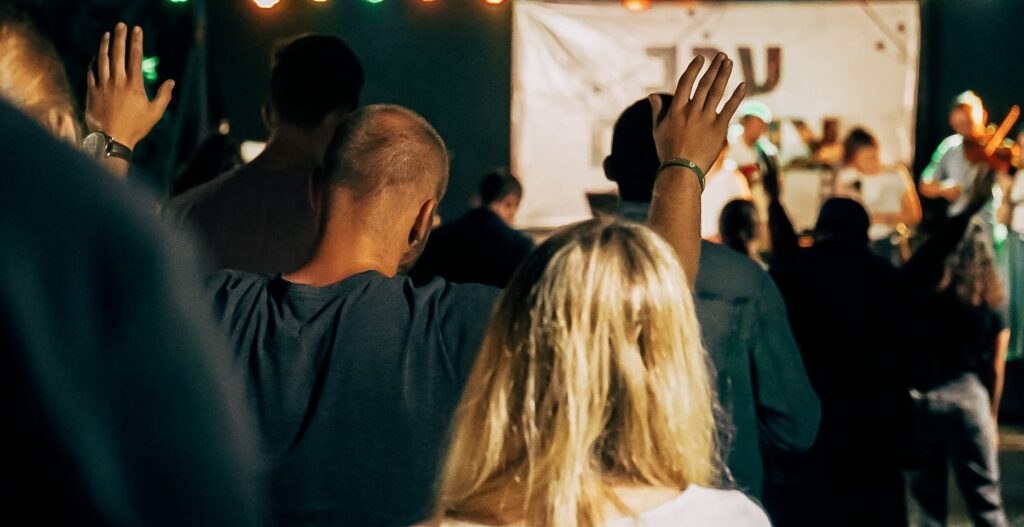
Arab Christians, on the other hand, worship on Sundays and in the Arabic language, and Christmas and Easter are big times of celebration. There are many crosses and Christian symbols in Arab churches, and much more readiness to identify with the global church.
For Jewish people, who have a history of being persecuted by the church over the last 2000 years, the association with the wider church can be painful and downplayed. As you can see, get togethers can be complicated! But certainly not impossible. After all, we are one new man in Messiah!
Unity between Jews and Arabs
Here at ONE FOR ISRAEL, Messianic Jewish believers serve shoulder to shoulder with Arab Christians, and we all work together in harmony. This is daily life for us, but we are by no means unique. There are Jewish and Arab believers who are happily worshiping, serving, and living together all over Israel. There are many joint worship events with songs in Hebrew and Arabic, and right now hundreds of Israeli believers have committed to a 40 day fast together, facilitated by the worship group, Solu.
There are Arab churches that minister to Jewish neighbors and Messianic Jewish congregations with Arabic outreach teams.
There are Jews and Arabs studying the word of God together at our Bible college, and supporting one another as we seek to serve our communities.
“It has been incredible to experience the blessing in getting to know each other, and tasting heaven in the love and unity among these precious brothers,” Dr Erez Soref said at the end of an MA program for Jewish and Arab pastors. “We were able to discuss difficult and painful issues in a spirit of love and forgiveness. We learned to be transparent with each other in challenging and personal issues, sharing hearts.”

Messianic Jewish pastor, Meno Kalisher, admitted, “The Arab pastors for me were new creatures. Totally new. I didn’t know them before. But when you put all our guys together, listen, we had fun!” Now his congregation has both Jews and Arabs as well as an Arab outreach team which is an integral part of the congregation.
Meanwhile, Arab Pastor Saleem Shalash had his own apprehensions and questions leading up to the course ten years ago. “Are they really believers? Do they believe in the Messiah? Believe in Jesus?” He wondered about his Jewish counterparts. Today his church in Nazareth, Jesus the King, is dedicated to serving Jewish people in Israel and taking them aid along with the Gospel.
“We visited a widow, Jewish widow, a Holocaust survivor, and I remember this visit because it was very unique. We write in three languages in our food packages: in Arabic, Hebrew and English. She looked at me and she said, “Are you Arab?” And I said, “Yes, ma’am.”
She said, “How come Arabs bring food to [someone] Jewish? We are enemies.” I said, “No, we are not.”
“How?” She asked. Saleem replied, “Because of your Messiah.”
And that sums up the situation.
We have found the secret to peace in the Middle East.
Jewish and Arab believers may not be everyone’s favorite in Israeli society, but we are equally beloved by one Father, and saved by the blood of the same Son.
Where there once was enmity, Yeshua has brought us together and made us “one new man” in Him:
“For he himself is our peace, who has made us both one and has broken down in his flesh the dividing wall of hostility by abolishing the law of commandments expressed in ordinances, that he might create in himself one new man in place of the two, so making peace, and might reconcile us both to God in one body through the cross, thereby killing the hostility.” (Ephesians 2:14-16)