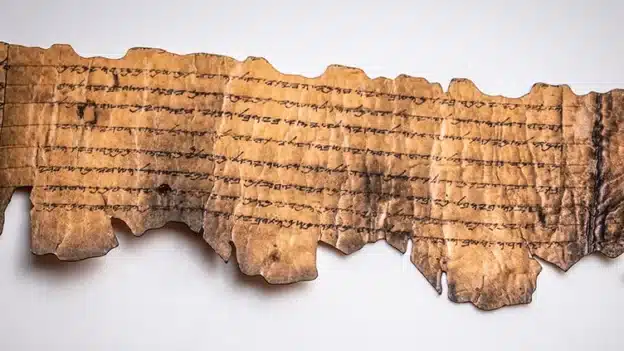
“Are You not from everlasting, O LORD, my God, my Holy One? We will not die. You, O LORD, have appointed them to judge; and You, O Rock, have established them to correct. Your eyes are too pure to approve evil, and You can not look on wickedness with favor. Why do You look with favor on those who deal treacherously? Why are You silent when the wicked swallow up those more righteous than they?” (Hab 1:12–13).
The power of the book of Habakkuk lies in its ability to speak to us in times of emotional despair and spiritual depression, when there are gaping chasms between our theological beliefs and our actual experiences. Habakkuk’s crisis of faith was the result of a theology that was ill-equipped to account for God’s actual activities, and apparent inactivities, in the real world.
Habakkuk did not walk away from God; he went to God with his disappointment.
Habakkuk complained to God about His silence in the face of terrible violence (in Hebrew the word for violence is “hamas”; 1:2–3), and about the perversion of justice (1:4) taking place among his own people. God responded by declaring that He would raise up a people who lacked true justice (1:7) and were even more violent (1:9) to chastise His people. At this point, Habakkuk’s statement of faith collided head on with the real God. The prophet protested that such action contradicted his understanding of systematic and biblical theology (see Hab 1:12–17).
Over the years, I have met people who have walked away from the faith because of God’s perceived “failure” to live up to their theological expectations. If we find ourselves in this place, it is here that the book of Habakkuk can help us most. Habakkuk did not walk away from God; he went to God with his disappointment. He recognized his own limitations and waited upon God for greater clarity, as his “faith sought even more understanding” (in Latin, “Fides quaerens intellectum”).
Let us therefore go with Habakkuk and take our stand upon the rampart, allowing God to mold and shape our imperfect understanding of theology.
“I will stand on my guard post and station myself on the rampart; and I will keep watch to see what He will speak to me, and how I may reply when I am reproved” (Hab 2:1).