Description
REGISTRATION is OPEN till 04/02/2026
Course Description
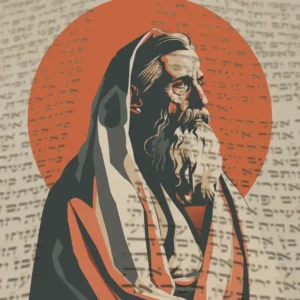
This course shall focus on the works and motives of Rashi and his contemporaries. Rashi – Rabbi Shlomo Yitzchaki – lived in the 11th Century in France, during a time when persecution against Jewish communities was on the rise. Rashi is still considered the foremost commentators of the Tanakh (and the Talmud) among Traditional Judaism. He is known for his “Pshat” method, which attempts to give the simplest and literally meaning of the texts. Nevertheless, recent studies reveal that a vast percentage of his interpretations were apologetic in nature; meaning, his commentary was far from being the “Pshat” of Scriptures. Rather, it was a way to protect his Jewish community against the Christian interpretation, especially concerning Messianic verses and prophecies from the Old Testament.
Course Objectives:
- To inform the students with the religious and cultures background of Rashi’s times.
- To get the students more familiar with Rabbinic interpretation of scriptures.
- To give the students a taste of Rashi’s most famous commentaries of the Tankah.
- To inform the student with Jewish-Christian relations, through the eyes of Rashi.
Learning Outcome
- The students will be more sensitive to the circumstances of Rashi’s commentary.
- The students will learn to appreciate Rabbinic methods of interpretation in its right context.
- The students would learn the motives of Rashi’s commentary and will know how to respond accordingly.
- The students will learn to appreciate more the reasons behind the ‘parting of the ways’, concerning Jewish-Christian relations, especially through Rashi’s point of view. Thus, they will grow more sensitive towards Jewish antagonism concerning the Gospel.
Course Structure
The lessons will be held through a Zoom format, consisting of lectures and interactive discussions between all participance. All together there will be 10 three hour (with breaks) Live zoom lectures. Recordings will be available to registered students.
We cannot ensure the quality of zoom recordings should technical failures occur. We also cannot guarantee that all parts will be recorded. Therefore, it is NOT possible to register for recordings only. Students need to participate in live lectures.
Course Dates and Topics:
| Date | Topic | Assignment |
| Feb 11 | Introduction to course; the fall of Biblical Judaism and the rise of the ‘Rabbinic Church’; the literary context of Second Temple period; The way the Oral-Law treated the Tanakh and used it | Blumenfield, “Rashi, the Teacher in Israel” |
| Feb 18 | The parting of the ways; Conversion, Theology and religious practice of the two churches: Messianic Judaism and Rabbinic Judaism; Jewish-“Christian” relations | Touitou, “Rashi’s Commentary on Genesis 1—6 in the Context of Judeo-Christian Controversy” |
| Feb 25 | Main three types of Rabbinic literature: Midrash, Halachah and Haggadah; the rise of Biblical commentary; examples | Lawee, “Biblical Scholarship in Late Medieval Ashkenaz: The Turn to Rashi Supercommentary” |
| Mar 4 | The Messianic-Rabbinic debate, turning into a Jewish-Christian polemics; examples | Bergman, “Rashi as Commentator” |
| Mar 11 | Towards the end of the Middle-Ages: The golden age of Rabbinic commentary and the introduction of the ‘Pshat’ method; examples | Zeitlin, “RASHI [Rabbi Solomon of France]” |
| Mar 18 | The ‘Minim’ as Messianic Jews, in Rabbinic thought and especially in Rashi’s commentary; The destiny of Gentiles in the world to come; Examples | Signer, “King/Messiah: Rashi’s Exegesis of Psalm 2” |
| Mar 25 | Rashi interpretation: ‘Pshat’ or Polemics? Examples | Walton, “In Defense of the Church Militant: The Censorship of the Rashi Commentary in the Magna Biblia Rabbinica” |
| Apr 1 | Passover Holiday, no class | |
| Apr 8 | Passover Holiday, no class | |
| Apr 15 | Rashi interpretation: reasons and objectives; Examples | Lawee, “The Reception of Rashi’s Commentary on the Torah in Spain: The Case of Adam’s Mating with the Animals” |
| Apr 22 | Israel Independence Day, no class | |
| Apr 29 | Rashi commentary: hidden debate with Christian interpretation; Examples | Shereshevsky, “Rashi’s and Christian Interpretations” |
| May 6 | The effect of Rashi’s legacy on Jewish thought today and the Messianic interpretation of the Hebrew Bible; summery of the course | Schoenfeld, “One Song Too Many” |
Must Read:
(choose two books for reading assignment, one from each list)
-
Please choose one book from list A:
-
-
- Bonchek, Avigdor. What’s Bothering Rashi?. Philipp Feldheim, 1997.
- Grossman, Avraham. Rashi. The Littman Library of Jewish Civilization in association with Liverpool University Press, 2014.
- Kearney, J. Rashi – Linguist despite Himself. New York and London, 2010.
- Liber, Maurice. Rashi: A Historical Biography of the Man Who Shaped Jewish Biblical Commentary. Independently published, 2025.
- Owen, Aron. Rashi: His Life and Times. London: Jewish Religious Educational Publications 1955.
- Shulman, Yaacov David. Rashi: The Story of Rabbi Shlomo Yitzchaki. Moscow, 1993.
-
-
Please choose one book from list B:
-
-
- Bar-Asher Siegal. Michal. Jewish-Christian Dialogues on Scripture in Late Antiquity: Heretic Narratives of the Babylonian Talmud. Cambridge University Press, 2019.
- Boyarin, Daniel. Border Lines: The Partition of Judaeo-Christianity. University of Philadelphia: Pennsylvania Press, 2006.
- Brown, Michael L. Our Hands Are Stained With Blood. Destiny Image Pub., 1992.
- Dunn, James D. G. (Ed.). Jews and Christians: The Parting of the Ways, A. D. 70 to 135. Wm. B. Eerdmans Publishing Co., 1999.
- Crawford, J. Brian. The Scandal of a Divine Messiah: A Response to Maimonidean and Kabbalistic Challenges to the Incarnation. Wipf & Stock, 2024.
- Maccoby, Hyam. Judaism on Trial: Jewish-Christian Disputations in the Middle Ages.The Littman Library of Jewish Civilization in association with Liverpool University Press, 1993.
- McCaul, Alexander. The Old Paths, or The Talmud Tested by Scripture. Andesite Press, 2017.
- Neusner, Jacob. Judaism and the Interpretation of Scripture: Introduction to the Rabbinic Midrash. Baker Academic, 2004.
- Porton, Gary G. Understanding Rabbinic Midrash. Ktav Pub. House, 1985.
- Rydelnik, Michael. The Messianic Hope. B&H Academic, 2010.
- Safrai, Zeev. The Literature of the Sages, Midrash, and Targum. Fortress Press, 2007.
- Synan, Edward A. The Popes and the Jews in the Middle Ages. Macmillan, 1965.
- Yuval, Israel Jacob. Two nations in your womb. University of California Press, Berkeley, 2008.
-
Bibliography:
- Abrahams, Israel. Jewish Life in the Middle Ages. Dover Publications, 2012.
- Bar-Asher Siegal. Michal. Early Christian Monastic Literature and the Babylonian Talmud. Cambridge University Press, 2013.
- Bar-Asher Siegal. Michal. Jewish-Christian Dialogues on Scripture in Late Antiquity: Heretic Narratives of the Babylonian Talmud. Cambridge University Press, 2019.
- Becker, Adam H. (Ed.). The Ways that Never Parted: Jews and Christians in Late Antiquity and the Early Middle Ages. Fortress Press, 2007.
- Bekkum, W. J. Van. “Hebrew Grammatical Tradition in the Exegesis of Rashi”. in Rashi 1040–1990, ed. G. Sed-Rajna, Paris 1993, pp. 427–436
- Berger, David. Jewish-Christian Debate in the High Middle Ages. Generic, 1996.
- Bergman, Bernard. “RASHI AS COMMENTATOR”. Tradition: A Journal of Orthodox Jewish Thought, vol. 1, no. 1, 1958, pp. 104–116.
- Blum, Edwin & Rydelnik, Michael (Eds.). The Moody Handbook of Messianic Prophecy: Studies and Expositions of the Messiah in the Old Testament. Moody Publishers, 2019.
- Bock, Darrell and Glaser, Mitch. To the Jew First. Gr Rapids: Kregel Academic, 2008.
- Bock, Darrell and Glaser, Mitch (Eds.). Israel, the Church, and the Middle East: A biblical response to the current conflict. Kregel Publications, 2018.
Instructor:
Dr. Golan Broshi
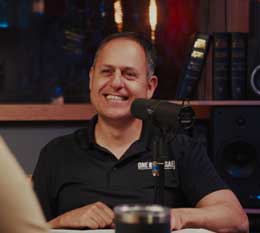
Dr. Golan Broshi is an Israeli born Messianic believer in Yeshua and an active member of Or Ha-Sharon Messianic Congregation. He holds MA in Social Education, MA in Jewish Education, and DMin in Middle East Leadership Ministry. He serves on the faculty of Israel College of the Bible in Netanya, Israel, as a full-time lecturer. His teaching field concentration is on Jewish Oral Law, Biblical Hebrew, and Education. Dr. Golan Broshi has published several scholarly articles and books including, The Oral Law Debunked (co-authored with Dr. Eitan Bar, One for Israel, 2018), “Shavuot,” in A Handbook on the Jewish Roots of the Christian Faith (eds. Craig A. Evans, David Mishkin, Peabody, MA: Hendrickson, 2019).
Course at a Glance
- Live Lectures via Zoom
- February 11 – May 6, 2026, Wednesdays 4 – 7 PM (Israel Time)
- Language: English
Course Fees
- For Academic Credit – $750 USD
- DTS Students – $450 USD
- For Personal Enrichment – $249 USD
*These fees do not include required textbooks
**Payment is non-refundable