The Jewish year flips from 5786 to 5787 on the first day of the month of Tishrei, the seventh month in the biblical calendar, which significantly falls on 9/11 this year. You can always calculate what the Jewish year is by adding 3760, or 3761 if it is after the first of Tishrei in the Fall. But how did the Jewish year get set in the first place, and is there any biblical basis to it?
As old as time itself?
In the Bible the year is counted based on key figures or events, for example the number of years of a king’s reign, or since the Exodus, and so it would be updated and usurped periodically. The decision to fix the date to represent the beginning of the world was only settled in the second century after various attempts were made to calculate the year of creation based on the ages given in Biblical genealogies. The Jewish Sages believed the creation account in Genesis 1 took place in a matter of literal days rather than epochs, leading to the young earth result we have today.
While we write 2026 AD (“Anno Domini”, the year of our Lord) to distinguish from BC, “Before Christ”, it is common for those in academic circles and among Jewish people to prefer the abbreviations CE and BCE: the Common Era and Before the Current Era, seeking to sidestep the One who split time in two.
When writing the Jewish year of 5787, the abbreviation AM meaning “Anno Mondi” is used, referring to the year of creation.
Rabbi Yossi ben Halafta asserted that the birth from nothing or “molad tohu” of the universe happened on what we would call Monday, October 7, 3761 BC, or what he would call the second day of the week, the first of the month of Tishrei, year 1. This is why the Jewish year changes on the first of Tishrei, and is called Rosh Hashanah, or “head of the year.”
However, as is often the case, different rabbis had different ideas about how to calculate when that year really was and arrived at different conclusions, so hold this number 5787 lightly.
Josephus for example calculated things quite differently by using the Septuagint rather than the Masoretic text used by the Sages, and French historian Alphonse des Vignoles counted some 200 different calculations that had been made with results varying up to 3,500 years! Quite when the counting should truly start is known by God alone, but the chances that the universe really began exactly 5787 years ago are pretty slim.
Not only were there different opinions about how to count the genealogies but there are also a few different calendar systems, including one invented by the Essenes who wrote the Dead Sea Scrolls.
Their system was very tidy: there were always exactly 364 days per year and 52 weeks, so feasts fell on the exact same day of the week every single year. They divided time into 14 “seasons” of 10 Jubilees each, which are grouped together in four ages in what is known as the Zadok calendar:
- The Age of Creation was the 2000 year period between Adam and Abraham (year 1 to 2000 AM, equivalent to approximately 3925–1925 BC)
- The Age of Torah, the 2000 year period between Abraham to the fall of the second temple (year 2001–4000 AM, or 1926 BC-75 AD)
- The Age of Grace was the 2000 year period more or less from the second temple until today (Years 4001–6000 AM, or approximately AD 75–2075)
- The Age of the Kingdom: A last period of 1,000 years (Years 6001–7000 AM, or approximately AD 2076–3075), referred to as the Millennium or Sabbath rest of creation.
“A day is like a thousand years, and a thousand years like a day,” writes Peter (2 Pet 3:8), leading some to believe there are 6 thousand years (or millennia) before the Messiah comes for the final thousand years of Messianic rule — a shabbat of epic proportions, if you will. According to this thinking, God will wrap up time itself after the seventh millennium and we will step into eternity.
Jewish tradition does not follow the Zadok calendar but arriving on the system we have today was quite a complex and contested process, formalized in rabbinic texts, most notably Rabbi Yossi ben Halafta’s Seder Olam Rabbah, in the second century. Later in the Middle Ages, Maimonides laid down more details, further consolidating Rabbi Halafta’s system.
Rightly or wrongly, this system has been in place now for generations, and so when we come to the first of Tishrei, the Jewish year changes and the people celebrate.
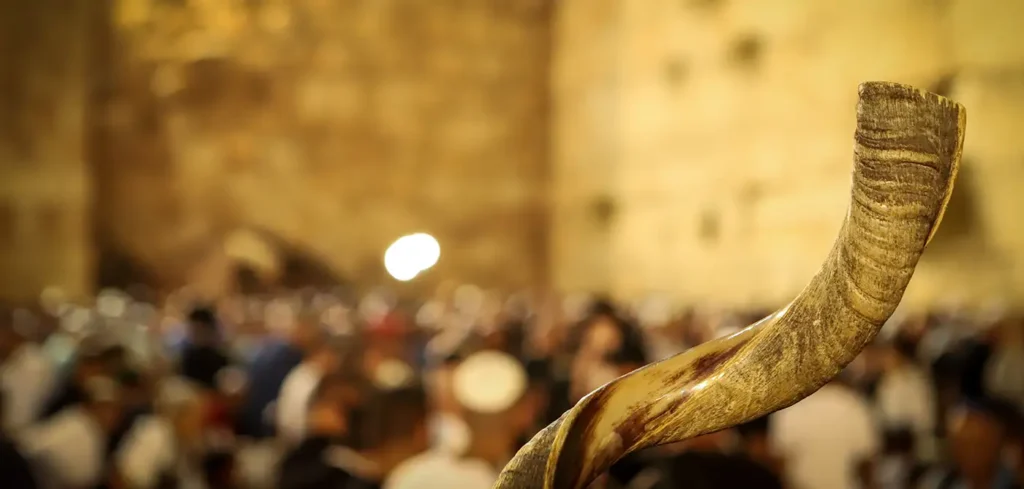
It’s not quite like New Year’s Eve in the nations, but there are family gatherings, special feasts and sweet treats, and lots of trumpets sounding — the first day of the seventh month is the Feast of Trumpets according to the Bible.
The times and the seasons
The name of the seventh month “Tishrei” means “beginning” in Akkadian, a name likely picked up while the Jewish people were in exile in Babylon, along with several other names of the months. It makes sense as many cultures around the world consider the end of the summer to be the end of the year, with a new year starting in the Fall.
The start of the fall feasts comes at the beginning of the agricultural cycle, and it’s interesting that God would set His own calendar so differently to all the surrounding peoples of the Middle East, breaking the annual cycle of agriculture in two.
God Himself refers to the harvest after the summer as the “end of the year:”
“You shall keep the Feast of Harvest, of the firstfruits of your labor, of what you sow in the field. You shall keep the Feast of Ingathering at the end of the year, when you gather in from the field the fruit of your labor.” (Exodus 23:16)
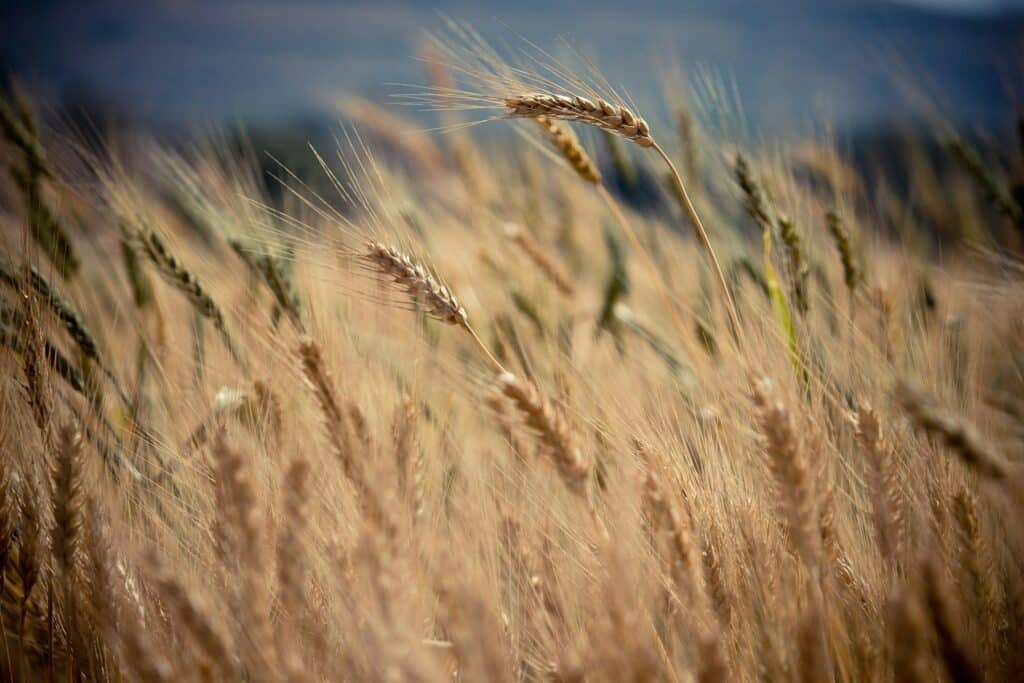
Yet God says in Exodus 12:2 that the beginning of the year is in fact in Nissan, half a year earlier in the Spring. Half way through the agricultural year comes Passover, foreshadowing of the crux of history. God challenges the idea that our life and survival depends on food and points instead to the abundant and eternal life given to us through the Messiah.
As well as calling it the first month of the year, God calls the month “Abib” which means “Spring:”
“In honor of the LORD your God, celebrate the Passover each year in the early spring, in the month of Abib, for that was the month in which the LORD your God brought you out of Egypt by night.” (Deuteronomy 16:1 NLT)
Because of this instruction to keep Passover in early Spring, careful watch is kept on whether Passover is slipping out of sync with the Spring since the Jewish months follow the moon rather than the seasons which are determined by earth’s rotation around the sun. An extra month is added every three years or so in order to keep Passover in Spring and the High holidays in the Fall.

You can understand the need for this adjustment when you see how the Muslim month of Ramadan travels all over the calendar, untethered to the seasons, because the Muslim calendar is purely following the moon’s orbit of the earth with no regard for the seasons.
“And God said, “Let there be lights in the expanse of the heavens to separate the day from the night. And let them be for signs and for seasons, and for days and years, and let them be lights in the expanse of the heavens to give light upon the earth.” And it was so.” (Genesis 1:14-15)
The earth spins giving us day and night as the sun appears and disappears from view, the months change with the moon, and the season are determined by the earth’s orbit as it travels on tilted axis around the sun each year. All of these celestial beings were created by the Lord, but they came after the creation of light. Time itself is part of the created order, as someone said made so that “things don’t happen all at once.”
It seems that even once Yeshua returns there will still be time, a thousand years of it to be precise. There are descriptions of marriage, births, disputes and death in that time (see Isaiah 2:4, 60:12, 65:20-23 and Zechariah 14:16-19) but eventually, God will wrap up this cosmos and time itself, ushering us into eternity with Him, the way it was always supposed to be.
Days, months and years will cease along with time itself. The solar system we have depended on for times and seasons will come to an end, but we will be with the true light, the Lord Himself, forever.