|
Monday, 13 May 2013 11:39
|
|

What do a harvest festival, 49 days, and a passionate love story have in common?
Shavuot means 'weeks'. God said, "Count off seven weeks from the time you begin to put the sickle to the standing grain. Then celebrate the Festival of Weeks to the LORD your God by giving a freewill offering in proportion to the blessings the LORD your God has given you." (Deuteronomy 16:9-10) Offerings of barley and wheat are made, and the 'seven species': pomegranate, grapes, olives, wheat, barley, figs and date honey are celebrated. It's a thankgiving time for the goodness of the land. It's a time of 'bikurim' or firstfruits. It's the time that the Torah was given to Israel and they agreed to follow it, making them a covenant community, and it's also the time that the church or body of Messiah was born at Pentecost. New birth... First fruits.
The word Pentecost comes from the 50 days that are counted from Passover to Shavuot - seven weeks is 49 days, and 50 days if you count the feast itself. The parallel events of the Torah being given at Sinai and the Holy Spirit being given in Jerusalem are no coincidence. Both signified a birth of the two religions, if we may call them that, and both were from the hand of God. One happened seven weeks after the Passover and liberation from Egypt, and the other seven weeks after the crucifixion and resurrection of our Passover lamb, Yeshua the Messiah. Both catapulted faith communities into action.
And traditionally, the book of Ruth is read during the feast, because the story is set at the time of the barley harvest, and Shavuot occurs between the barley and wheat harvests. Also, it is in the instructions for how to celebrate Shavuot that God includes this commandment: “when you reap the harvest of your land, you shall not reap your field right up to its edge, nor shall you gather the gleanings after your harvest. You shall leave them for the poor and for the sojourner: I am the Lord your God.” (Leviticus 23:22) This was the set up for the love story. Well - part of the love story...
|
|
Read more...
|
|
Sunday, 05 May 2013 16:47
|
|
It will soon be the Feast of Shavuot, which is the Feast of Weeks, and there is much hanging in the balance at the moment. Between the festivals of Passover and Shavuot, the weather can be very changeable, and has a huge impact on the destiny of the famous seven species of crops that God promises to the people of Israel. It would have been tempting for ancient Israel to revert to praying to idols to control the forces of nature during this time to get the ideal conditions for good crops. Today, we are also in a season of political unrest, and recent military action in Syria will most likely have alarming ramifications, also raising the question - on whom will Israel depend?
|
|
Read more...
|
|
Sunday, 28 April 2013 07:46
|
Last night in Israel people up and down the country lit bonfires to celebrate “Lag B’Omer”. This is not a Biblical holiday, mind you. In fact it is quite the opposite. During this time of counting the days between Passover and Pentecost (or Shavuot - the Feast of Weeks) some events transpired in Jewish history back in the late first century and early second century after Yeshua which gave rise to this tradition... but it flies in the face of God's intentions for his people.
|
|
Read more...
|
|
Tuesday, 23 April 2013 09:33
|
|
Here in Israel we have just passed through a roller-coaster period of seasons, beginning with great rejoicing during Purim that started about six weeks ago, through Passover in which we celebrated physical deliverance from Egypt and spiritual deliverance from sin and death. Then last week the mood changed drastically as we remembered the six million Jews who were murdered by the Nazis, and then last week began with a memorial for the 23,085 heroes and heroines of the Israeli military who laid down their lives so that the people of Israel may live in safety, and also the 2,493 victims of terrorism. And lastly, the very next day, the country broke out into celebration for 65 years of Israel's independence. Just as the driving rain and cold weather has suddenly turned to glorious sunshine, Israel's rhythm of sadness and celebration throughout the year reminds us that seasons change.
|
|
Read more...
|
|
Saturday, 13 April 2013 13:08
|
|
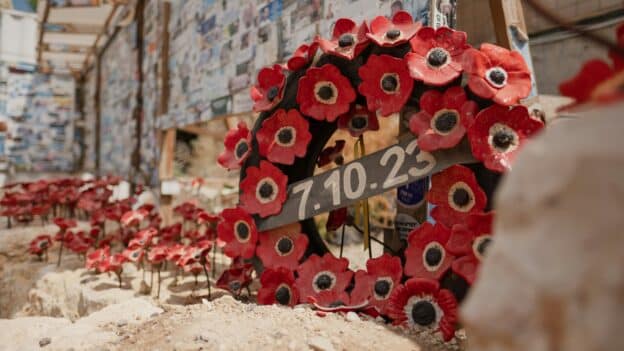
Monday and Tuesday are two very significant days for Israel - a day of mourning followed by a day of rejoicing. Monday is the annual Memorial Day for all those who have died in Israel's struggle to exist, either in the armed forces or as a result of terrorism. It is a day of solemn recognition that there have been many casualties in the birth and continued existence of the State of Israel.
As often seems to be the way in the Jewish way of life, the bitter and the sweet are juxtaposed - almost without time to catch a breath. Tuesday is Israel's Independence Day, when the nation breaks out into a huge party to celebrate its reestablishment after a 2000 exile.
|
|
Read more...
|
|
Sunday, 07 April 2013 15:28
|
|
“When you arrive in a place like this, you forget who you are", Bassam Aramin reflected, "This is a tragedy that cannot be described in words.” He was part of a group of eight Palestinians trying to get their heads around the horror at the Yad Vashem Holocaust Museum.
Yom haShoah means Holocaust Day in Hebrew, and although it was remembered in January in other countries around the world on the date that Auschwitz was liberated, Yom haShoah begins tonight in Israel, and ends the following evening. It is on the 27th day of Nissan, the month of Passover, and is 8 days before Israel’s Independence Day. Linking the Holocaust to Israel’s existence as a state, and in the month when stories of national redemption are in the forefront of Jewish minds was a matter of careful consideration. But as Israel still shudders and weeps with the trauma of what they had to go through as a nation, some Palestinians who could be considered Israel’s “enemies”, chose to take a long look into the horror of Holocaust memorials in order to try to understand the pain of the Jewish people.
|
|
Read more...
|
|
Sunday, 31 March 2013 15:34
|
Have you ever counted the days till an event you’re excited about? Time can go so slowly when you’re watching it. They say “a watched pot never boils” meaning that the more we pay attention to the time, the more conscious we are of it going slowly. I have certainly had that experience in a lecture or two. God, unsurprisingly, is aware of this phenomenon, and has capitalised on it to drive a powerful truth home. I am talking about the Biblical tradition of “Counting the Omer”, which has everything to do with the resurrection.
|
|
Read more...
|
|
Monday, 25 March 2013 11:44
|
|
In a fantastically multi-sensory way, the Feast of Passover pictures the salvation and deliverance of the Israel from Egypt, and foreshadows the salvation that the Messiah would work for the whole world one and a half thousand years later. It is a festival of freedom – from slavery, and from sin. It is no accident that the Jewish year starts at this point, according to God’s word to Moses: “This month shall be your beginning of months; it shall be the first month of the year to you” (Exodus 12:2). This is God’s way of letting us know the cosmic significance of the coming events. The clock starts here.
|
|
Read more...
|
|
Sunday, 17 March 2013 14:04
|
|

Changes are happening in Israeli supermarkets - cleaning products are on special offer, and sections of “Kosher for Pesach” goods are appearing with no traces of yeast in them. Yes, we’re gearing up for Passover! At this time of year, everyone gets busy spring cleaning, as the Festival of Unleavened Bread approaches, and all leaven must be removed from the house. It’s a time of getting rid of the leaven which represents sin, and remembering the miracle of the Angel of Death passing over the Hebrew houses that were protected by the blood of a lamb. Funny enough, there has also been a plague of locusts coming up from Egypt in the last week! You might have read about it in the news. The changing supermarket shelves and the frantic use of anti-locust pesticides are modern reminders of a mighty and ancient wonder that still speaks to us today.
|
|
Read more...
|
|
Sunday, 10 March 2013 21:06
|
|
Song of Songs is a very important book to the Jewish people. Some Christians avoid it as a steamy, sensual book of romantic love that says little about God, but the Jewish people hold it dear as a story of God’s impassioned love for his people, and theirs for him. Others in the Christian church appreciate it as an example of righteous romance, but find it hard to believe that the love story is an allegory of Yeshua and his bride that includes men and women alike. But there are two key phrases from the book which are very popular in Israel: אני לדודי ודודי לי - “I am my beloved’s, and my beloved is mine” (Song of Solomon 6:3), and secondly, לכה דודי - “Come, my beloved!” (Song of Solomon 7:11)
|
|
Read more...
|
|
Monday, 04 March 2013 18:39
|
Will Eisner was a Jewish artist who skillfully crafted books using cartoon-style pictures to tell a story. Accusations are continually flung at Jews that they are scheming to take over the world, and that they are plotting dastardly world domination enterprises. Antisemitism breeds through malicious cartoons which depict these ideas. Pictures are powerful. The second world war showed us the power of propaganda, but the use of art to slander Jewish people didn’t start with Hitler and it hasn’t ended there either. Here is the story of what Will Eisner tried to do to combat the problem.
|
|
Read more...
|
|
Monday, 25 February 2013 12:14
|
|
There has been much merriment and fun here in Israel, as we have just finished celebrating Purim over the weekend. It’s a time for rejoicing and partying that the people of Israel have been saved yet again from annihilation as described in the book of Esther. But this year, as the story of Esther was read aloud in public, something struck me. When the evil Haman was in charge, the people were confused. But when Mordecai the Jew was put in charge, the people rejoiced. Here are a few thoughts on how different leadership affects the people and why.
|
|
Read more...
|
|
Monday, 18 February 2013 08:21
|
Purim is the Jewish holiday taken from the book of Esther that reminds us that God is always at work even when He seems absent, and His plans for you can never be thwarted! It is difficult to find a more dramatic, fast-paced, riveting, and suspense filled plot than in the short story of the book of Esther - have you read it lately? On Thursday it is traditional for Jewish people to read the book aloud as a story - feel free to join us! The feast will be celebrated full force at the weekend, with fancy dress costumes, parties, and gifts given to the poor. Here are some thoughts about the meaning of Purim from the book of Esther...
|
|
Read more...
|
|
Tuesday, 12 February 2013 11:53
|
|
Who Really Killed Jesus? Not the Jewish people as a nation, decreed Pope Benedict XVI, who resigned yesterday. Amid the surprise and kurfuffle of the reactions, the legacy he leaves in releasing Jews from the accusation that they are collectively and singularly responsible for “killing Jesus” has been noted in Jewish quarters. This damaging dogma has been passed down the generaions through the Catholic church, causing much anti-Semitism and excusing countless murders of Jews. Of course, there are a wide variety of views about the Pope and Catholicism in general, but whatever we may think about the Pope, it’s good news that this profoundly unhelpful theological line has come to an official end. So why did it begin and how did it end?
|
|
Read more...
|
|
Monday, 04 February 2013 15:51
|
We talk about blessing, we pray for blessing, we read in the Bible about blessing, but have you ever stopped to ask - what does it really mean? Things going well, in the right direction? Prosperity - health, wealth and whatnot? God’s favour? What is it exactly? We can easily agree that it’s a very positive thing, but when we try to pin the concept of blessing down to a definition, it suddenly seems surprisingly slippery. We talk about blessing all the time as believers, but is it possible that we don’t really know exactly what we’re talking about?
|
|
Read more...
|
|
Sunday, 27 January 2013 12:33
|
|
Holocaust survivor, Henia Bryer, recalls, "I had an operation once and the anaesthetist comes and looks at [the number tattooed on] my arm and he says, 'What is this?' And I said, 'That's from Auschwitz.' And he said, 'Auschwitz, what was that?' ...And that was a young man, a qualified doctor".[1] Shockingly, people are growing up without knowing about what really happened. Today is Holocaust Rememberance Day in Europe and the United States of America, but all too often, acknowledgement of the Nazi atrocities and subtle anti-Semetism sit uncomfortably alongside each other.
|
|
Read more...
|
|
Tuesday, 22 January 2013 11:00
|
|
It can be bewildering considering that Yeshua the Messiah was an Israeli-born Jew, grew up in a Jewish community, practiced Jewish laws and customs, worshiped God at the Jewish Temple, his original followers were Jewish, and that all of his teaching was based upon and rooted in the Jewish Scripture that so many Jewish people find him incompatible with Judaism... but actually the good news is that there have always been Jews who believe in Jesus. In fact, at first, it was only Jews who believed in him, and today there hundreds of thousands of Messianic Jews, even though they are still in minority compared to non-Jewish followers of Jesus. If you read Acts 15, for example, you will see that back then a different question was asked: “Is it possible for a Gentile to follow the Messiah of Israel?” So why do we often hear today that “Jews don't believe in Jesus”?
|
|
Read more...
|
|
Tuesday, 15 January 2013 14:31
|
|
We've had unusual amounts of snow in Jerusalem this last week! It has been fun to see the snowmen appearing and famous ancient buildings dusted with snow. It's a breathtaking sight. There is no city like it on earth - none with so much atmosphere and none with so much conflict and controversy. It's a central point for the three main monotheistic faiths, but is there a better connection to God if you worship in Jerusalem? No, of course, not. However, the Bible does portray Jerusalem as the most important city in the world, and in Scripture it is called the 'City of God'. It becomes clear that man didn’t chose Jerusalem, God did! So how important is this city to God, and why?
|
|
Read more...
|
|
Tuesday, 08 January 2013 11:22
|
|
By sunset, Jerusalem’s stone walls are radiant with rosy golden and tawny hues, making it glow like a city of gold. There is a law passed during the time of the British mandate forbidding building using any other stone other than Jerusalem stone in the area, to preserve the heritage of the beautiful city. But do you know what this famous “Jerusalem stone” is made of geologically? It is limestone and dolomite, which are rocks formed over many years of compressing shells and corals - sea creatures of the past, compacted and compressed into stone and fossils. Jerusalem’s stones are teeming with life, and likewise, we are called to be living stones.
|
|
Read more...
|
|
Tuesday, 01 January 2013 22:51
|
Last night fireworks went off all over Israel, ushering in 2013 - but 2013 years since what? The abbreviations BC and AD (Before Christ and Anno Domini - the year of our Lord) are hard to swallow for most Jewish people, for whom Yeshua is a blot on the historical landscape and definitely not their Lord. In Hebrew, they talk about years before “the counting” and years of “the counting” without mentioning what (or who) started this whole Western counting business. It is not a calendar markation system that many Jewish people are comfortable with, mostly because the whole “Jesus thing” brought with it so much persecution for Jews. In Israel, 31st December celebrations are known as the holiday of “Sylvester”. Only a handful of other countries in the world celebrate New Year’s Eve by this name, and whilst it’s great as believers to celebrate 2013 years since our wonderful Lord came to live among us, the roots of “Sylvester” are as painfully anti-Semetic as they come.
|
|
Read more...
|
|
Wednesday, 26 December 2012 19:00
|
|
At this time of year, we often think of Messianic prophecies from the Jewish Scriptures, such as Isaiah 9, “For unto us a child is born...” and Isaiah 7, about a virgin giving birth to a son who would be called “Emanuel”, God with us. Many Christians puzzle about how Jewish people fail to see the obvious connection with Yeshua, our Messiah, but there are many obstacles in the way that prevent the people of Israel seeing the truth. One obstacle, however, has been removed recently...
|
|
Read more...
|
|
Tuesday, 18 December 2012 12:48
|
|
When I first became a believer, Psalm 23 was one of my favorites. It instilled so much peace and joy into my soul. Later, in Israel, I've learned something new and special about it that I couldn't know before. In the Arab-Bedouin culture there is a concept of reconciliation associated with meal. When you think of the verse about God preparing a table before David in the presence of His enemies it makes so much more sense when you understand the culture. I used to think about just as a beautiful metaphor. I would imagine David sitting at the table and enjoying a feast when the enemies are all around him, maybe even shooting at him and he keeps eating and doesn't care because He feels safe in God's presence. I also thought it was about the provision - he was surrounded by the enemies on every side and somehow God was providing him with nice meals. But there is an interesting Middle Eastern custom that helps understand this Psalm even further.
|
|
Read more...
|
|
Sunday, 09 December 2012 00:00
|
|
The symbol of Hanukah is the nine-branched candlestick. We often think of it as a festival of light, which blurs with every other festival of light found in so many cultures and faiths. But the true story is one of rededication. Leviticus 27 has laws on how a person can dedicate their house, and in Israel housewarming parties are called “Hanukat Beit” parties - “dedication of the house” parties. The Hanukah story is of a housewarming party for the ultimate house.
|
|
Read more...
|
|
Thursday, 06 December 2012 13:10
|
|
When we read about Israel in the Bible, what does it mean for us today? About a third of the world identify themselves as Christian, but Israel is 0.7% of the world. Even if you were to count all the Jewish people in the world, it is still only 2%, so when the Bible talks about Israel all the time, is God really only talking about this tiny minority of his people? Many Christians read prophecies concerning Israel and songs about Israel as if they were about all of his people - Christians included. Most of us read the Bible as if it’s talking to us today, and that when God says “Israel” he really means “us”.
|
|
Read more...
|
|
Wednesday, 28 November 2012 19:50
|
On Thursday 29th November, the Palestinian Authority will make a bid for statehood at the United Nations General Assembly, asking initially for enhanced status rather than full recognition as a sovereign state. It might be tempting to react immediately either one way or another, but what light can Scripture throw on this development?
|
|
Read more...
|
|
Wednesday, 28 November 2012 16:54
|
|
Can Jewish people be saved without accepting Yeshua as their Messiah? Some people think so. But the Bible is very clear that there is only one way to be saved. The Jewish Messiah, Yeshua, has paid for the sins of the Jewish people too. There is only one way to receive eternal life, and that is to accept his redeeming sacrifice.
By being deceived into thinking that Jewish people are eternally saved just because of their ethnicity, we can prevent people from hearing the truth that is necessary for salvation. Here we will look at what Jewish tradition teaches about the next life, and what the Bible tells us.
|
|
Read more...
|
|
Tuesday, 20 November 2012 12:35
|
Yet again, Israel is in centre stage in the media, and the world looks on agast as the tragic events unfold. Opinions, biases and accusations are flung from every corner. Clearly, the matter is not simple, and anyone who claims it is has missed a few thousand facts somewhere along the line, but truth is singular. And a lot of it remains hidden from view. One fact that the media will not tell you is that during the weekend, Arabs and Jews who share a love of Yeshua met and prayed together about the situation. They interceded for their peoples and their country alongside one another, entering the throne room of God as one new man in the Messiah.
|
|
Read more...
|
|
Sunday, 04 November 2012 13:52
|
“Every word in the Torah has wisdom and wondrous insights for those who understand them; [the Torah's] wisdom is unfathomable. [The Torah is] "longer than the earth and wider than the sea." One can only follow in the footsteps of David, God's Messiah, who prayed, "Open my eyes that I may behold the wonders of Your Torah" (Psalms 119:18).” Maimonidies, a famous Jewish rabbi, included this belief in his 13 principles of faith for the Jewish religion. The devout believe that every single word in the Bible is there on purpose, no matter how confusing it may be to us, and that it is our privilege and joy to dig for understanding.
|
|
Read more...
|
|
Sunday, 28 October 2012 14:54
|
Believers from all across Israel gathered in a forest in the Galilee region on Shabbat to fast and pray for the country, its inhabitants (Jew and Arab) and her neighbours. There was worship - both in Hebrew and Arabic - but the majority of the time was spent calling out to God for mercy, salvation and transformation. These are perilous times, and the pastors of the Land were inspired by the second chapter of Joel to call a solemn assembly.
|
|
Read more...
|
|
Tuesday, 23 October 2012 13:52
|
The Samaritans at the time of the New Testament were considered heretics that should be avoided... but Yeshua builds stories around them, knowing very well how they were perceived, and radically reaches out to them in a way that shocked his disciples. He also made it clear that his mission was first and foremost to the lost sheep of Israel. Are there lessons we can learn from these passages today?
|
|
Read more...
|
|
|